


The dress code in Marrakech: what you really need to understand
The question «how to dress in Marrakech» almost always comes with an assumption: that there's a dress code, and that you risk something if you don't follow it. The truth is, there isn't really a code, but there are very different areas from one another, and what's acceptable in Gueliz will draw attention in the middle of a residential medina. The rest of the article is about that.
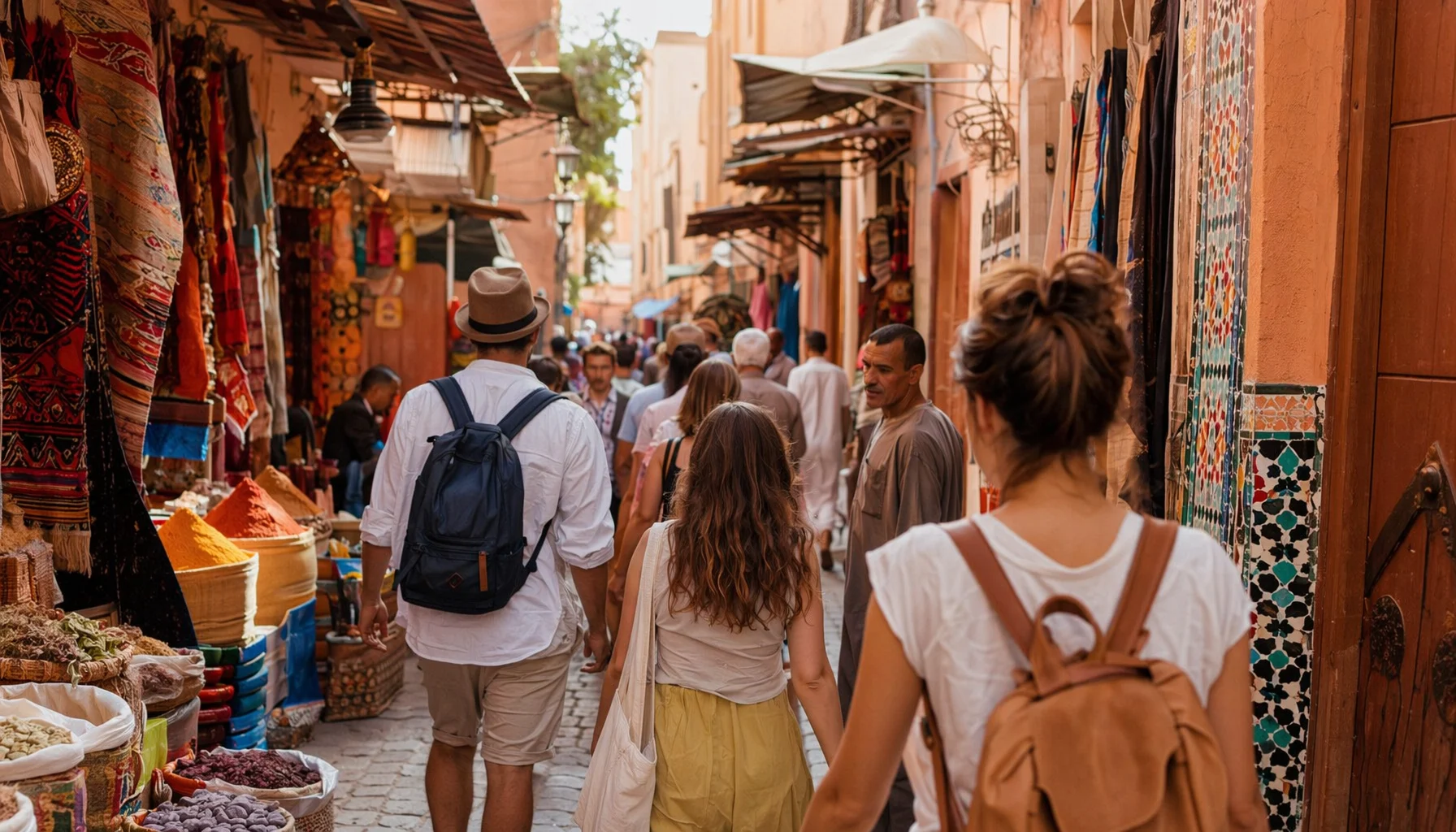
Marrakech is a city of several million inhabitants, with neighborhoods that have little in common with each other. Gueliz, the modern district, resembles any ordinary Mediterranean city. You'll see people in shorts, dresses, and suits, depending on the time of day and occasion. Hivernage, the hotel district, operates on the same principle. The medina, the historic center, is more complex: the tourist areas (Jemaa el-Fna, the large souks) have their own de facto rules, and the residential alleys have others.
What we regularly see: women in short dresses around Jemaa el-Fna, men in shorts in cafes in Gueliz, tourists in beachwear on the terraces of riads. All of this coexists without apparent tension. What we also see: people who have clearly misjudged their attire for the place they are in, and who feel it.
The logic of this article is not to tell you what to wear to «respect local culture» (a phrase that doesn't mean much in a city as diverse as Marrakech), but to give you a concrete understanding of what works, where, and why. What you do with that information is your business.
One last point before we get into the details: the question of what to wear in Marrakech also depends on the time of year. In July, with temperatures at 42°C, practical considerations take precedence over everything else. In December, the question is often the opposite: people underestimate the cold at night. The section on seasons covers this in detail.
For women: what works, where, and why
The clothing question in Marrakech is more nuanced for women than for men, because perceptions vary more depending on the context. It's not a matter of written rules: it's about what you feel on the spot, depending on the neighborhood, the time of day, and your itinerary for the day. We'll go over the main situations.
In Gueliz, Hivernage, and tourist areas
In these areas, dress code is frankly relaxed. In the restaurants, cafes, and hotel bars of Gueliz and Hivernage, you'll see customers in short dresses, jeans, and evening wear. The shopping malls are frequented by Moroccan women dressed just as diversely as in any Mediterranean city. It's not Tehran, it's not Dubai: the freedom of dress in these neighborhoods is comparable to what you'd find in Barcelona or Valencia.
In the medina (tourist center: Jemaa el-Fna, souks)
You regularly see women in shorts at the Majorelle Garden, and no one says anything. The same outfit in the residential area of the medina at 2 p.m., and it's a different story.
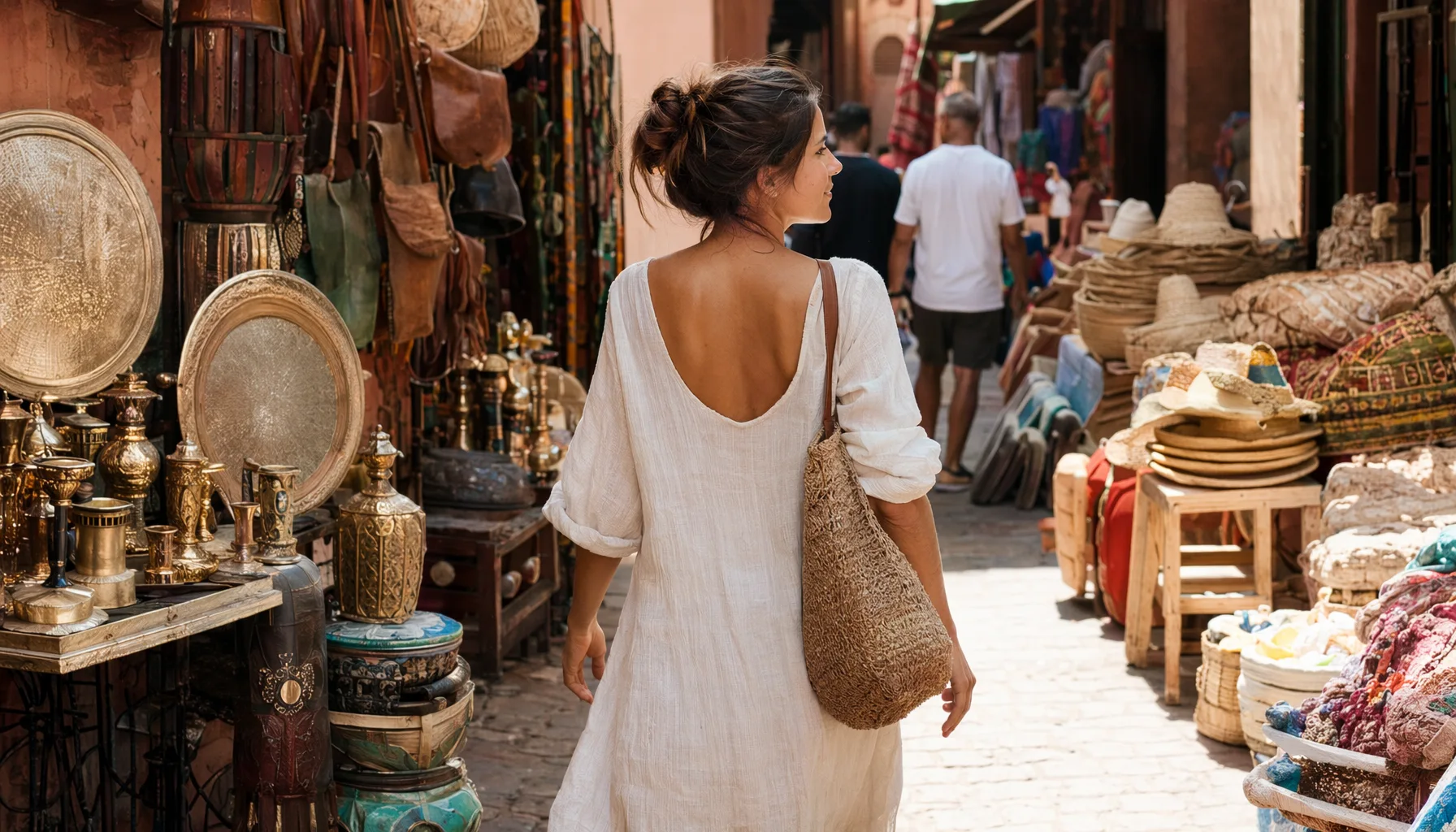
In the souks and around Jemaa el-Fna, a dress above the knee or short shorts technically works. No one will stop you. But you will be looked at, you will hear comments, and after two hours, the feeling will weigh on you. If it's your conscious choice, go for it. If you just didn't think about the effect, pack a pair of light pants in your bag in the morning.
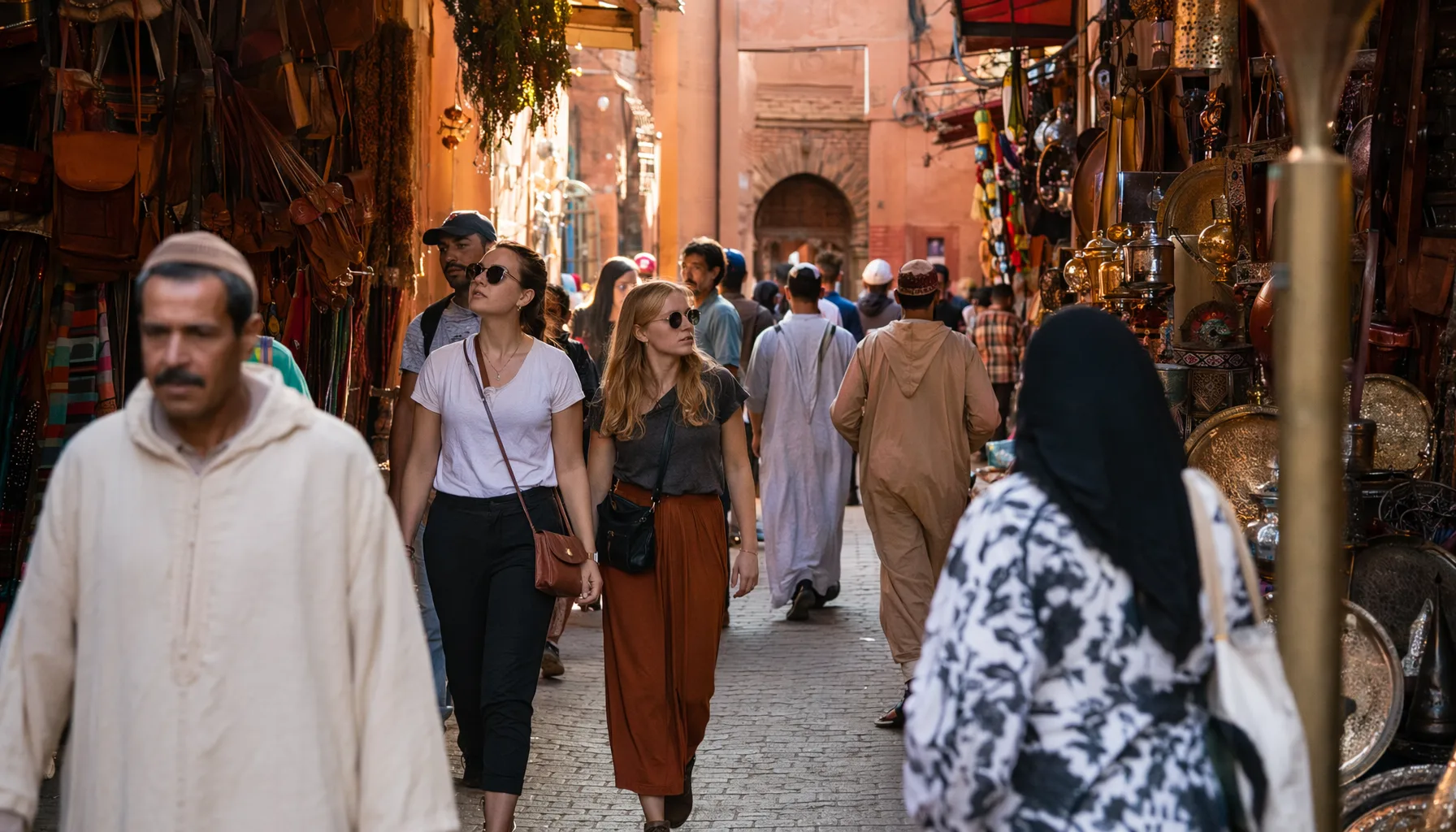
What works well in the tourist medina: a light long or midi dress, loose trousers (linen or cotton, essential in summer), a below-the-knee skirt, a top that covers the shoulders or a light scarf in your bag. It's not about being invisible, it's about not spending the day dealing with unwanted interactions.
For more general street harassment in the medina, that is covered in another article: Marrakech safety, the complete panorama. Attire is one factor among others, but it's not the only one.
In the residential medina (away from the souks)
This is truly different. These alleys, a 10-minute walk from Jemaa el-Fna but off the typical tourist paths, are spaces of everyday life. The women in the neighborhood are often dressed conservatively. A sleeveless top or short shorts in these areas will generate discomfort that has nothing to do with the touristy medina.
It's not a place where they'll say anything threatening. But the feeling of being out of context is real, and it affects the visiting experience. If your itinerary for the day includes exploring off the beaten path, anticipate it by adding a light layer to your bag.
On excursion (Atlas, Agafay, desert, Ourika)
Excursions to the Atlas Mountains, Agafay, or the Ourika Valley take you to villages and rural areas where the social composition is still different. In a Berber village in the Atlas Mountains, covered shoulders and mid-calf legs are truly the most comfortable choices, both for the individual and for interactions on site.
The good news is that the outfits suitable for an outing are exactly the same as those suitable for the July sun (linen pants, a light maxi dress, a short-sleeved top). It's not a sacrifice of comfort; it's simply a choice of appropriate material.
At the pool and on the riad terraces
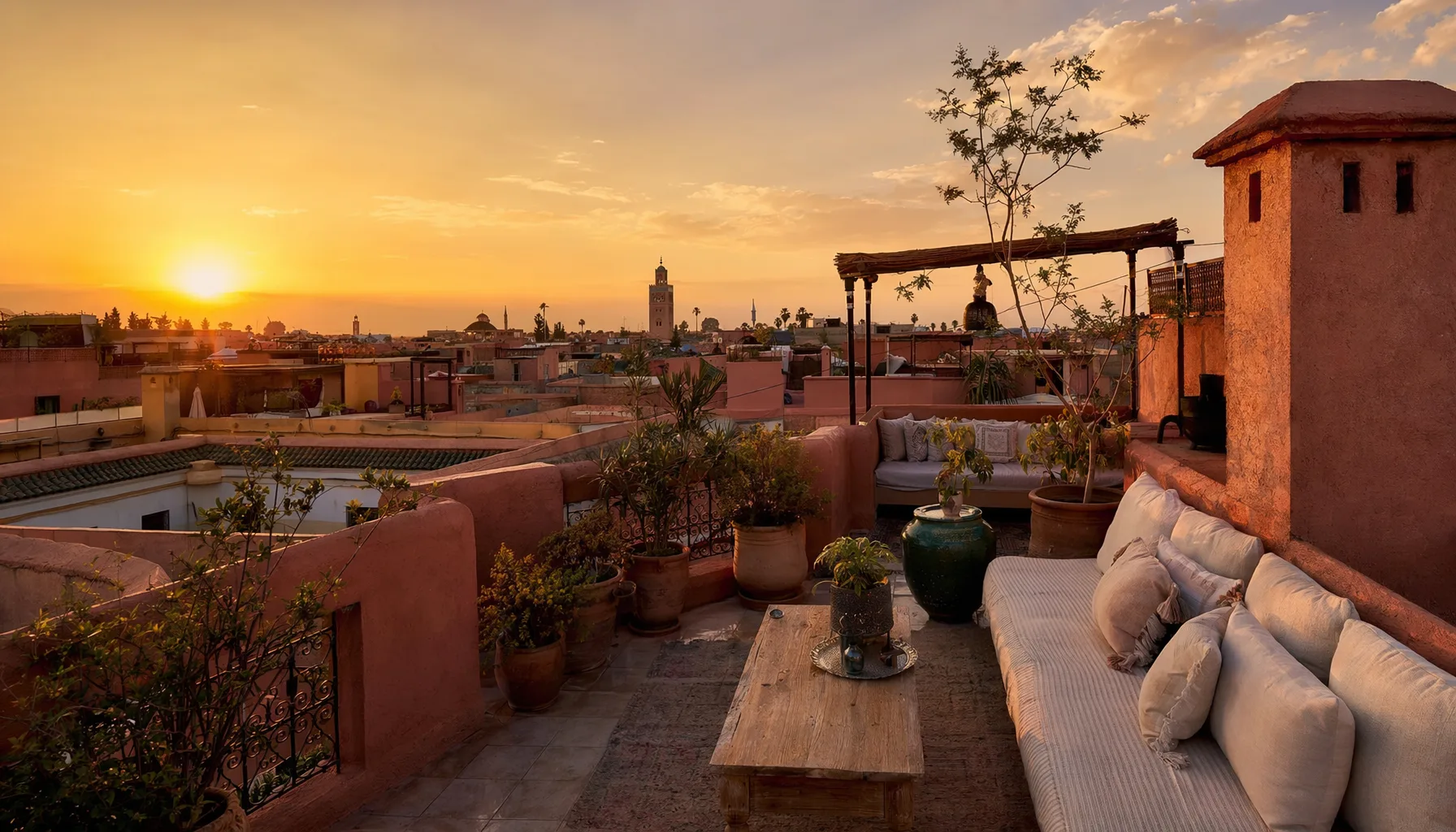
Here, the rules change completely. Riad terraces and pool areas are private spaces that operate according to their own logic. Bikini, one-piece swimsuit, full beachwear: all of that is perfectly in place. This is the designated area for it. Higher-end riads sometimes have terraces with views of the medina rooftops, which creates a striking contrast between the private living space and the neighborhood life below, but that doesn't hinder anything.
If you have any doubts about an outfit, ask yourself where you'll be wearing it during the day. If it's Gueliz and a riad terrace, the question doesn't really arise. If it's a day in the souk and residential medina, light pants are better than shorts.
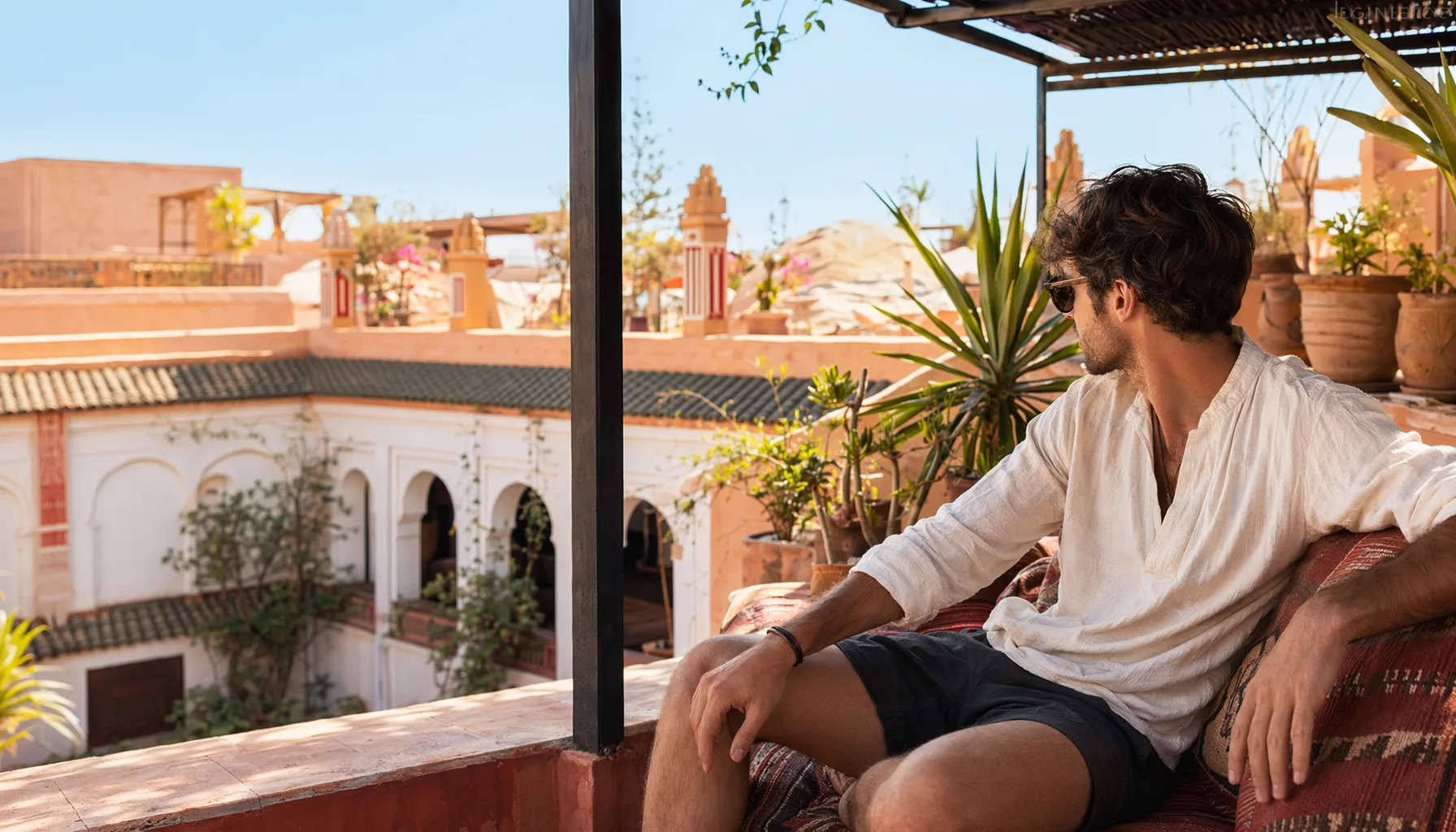
For men: it's simpler, but with a few rules
For men, Marrakech is significantly more permissive. Jeans, chino pants, shorts that go below the knee: these are acceptable in almost all situations. A basic t-shirt is the norm in all tourist areas. Let's not pretend it's complicated, because it's not.
However, there are some nuances. In the residential medina, short beach shorts will draw attention. It's not dramatic, but shorts that come down to the knee or slightly below will notably change the experience. It's the same logic as for women, though less pronounced.
The sleeveless top (tank top) in the souks is the most frequent point in the feedback. It works, but it generates a bit more prospecting from the vendors. Is it related to the outfit or other signals? Both probably. When in doubt, a basic t-shirt solves the issue.
For evenings at restaurants or bars in Gueliz and Hivernage, dress codes are comparable to what you'd find in a Mediterranean city: jeans and a shirt, or even something a bit more dressed up depending on the establishment. High-end restaurants in the medina (riad-restaurants) sometimes have implicit dress codes: dress up a little, ripped jeans are not the norm in these places.
For site visits (gardens, museums, mosques closed to non-Muslims like the Koutoubia), no specific dress code beyond being modest. The Ben Youssef Madrasa may require covering shoulders and knees, but this applies to both sexes and takes two seconds to anticipate.
Visible tattoos and obvious piercings are not a formal problem. In residential areas, they might elicit some curious glances, but nothing comparable to other conservative destinations. It's not a matter of safety.
In summer, the temptation is great to stroll around in a tank top as soon as it gets warm. The reality: a light, short-sleeved t-shirt made of breathable cotton is no warmer than a tank top, and it makes navigating through the souks and medina much more peaceful. It's a simple calculation.
Overall, for a man, the clothing question in Marrakech is resolved by «European city vacation attire.» The rest is about comfort.
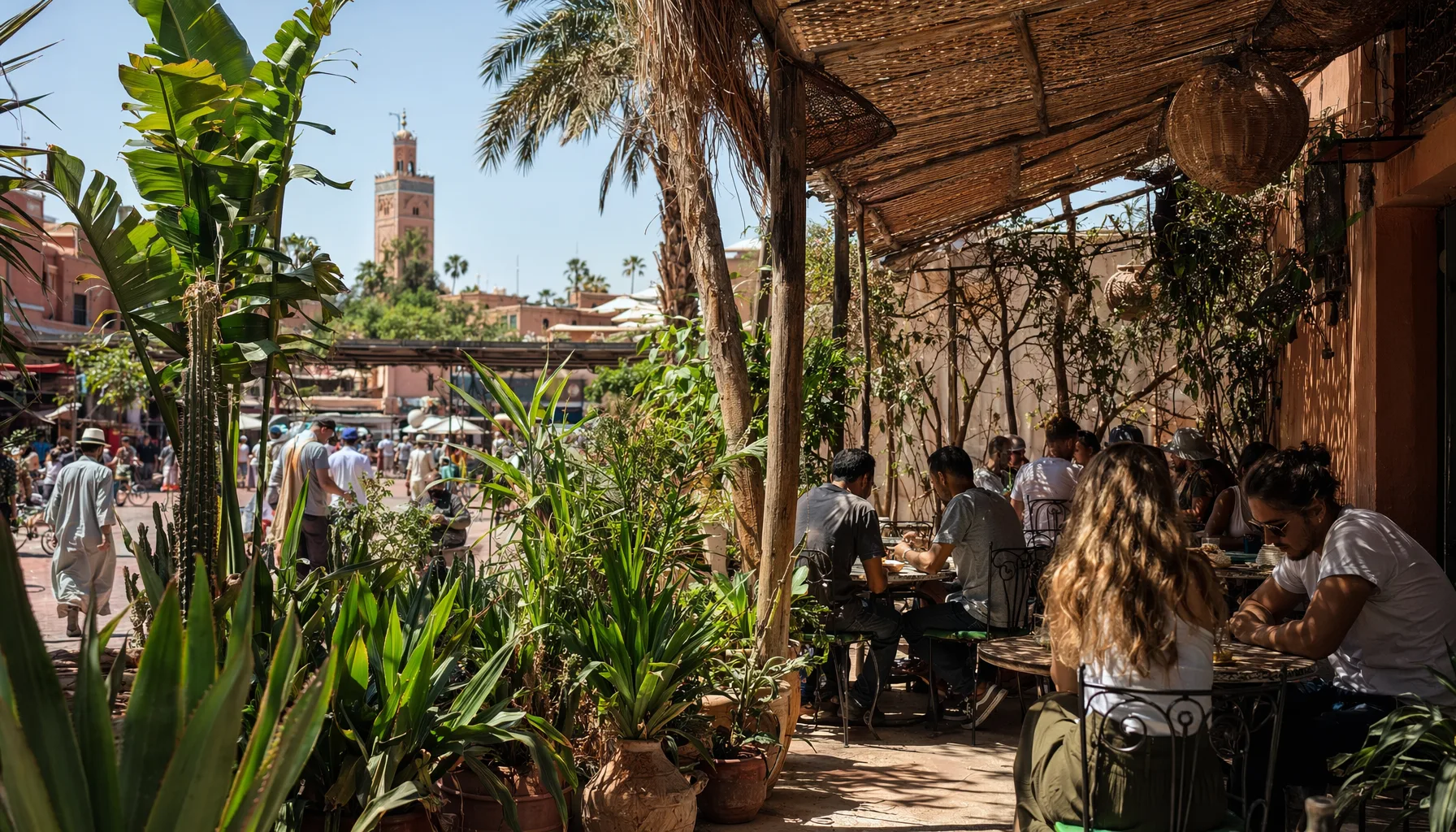
The weather: how to dress by season
The weather in Marrakech is often described as «always hot and sunny.» This is true in the summer. It's much less true the rest of the year. Here's what you can really expect, season by season.
Summer (June-August)
It's the easiest period to anticipate and the most difficult to bear. Temperatures regularly climb between 38 and 45 °C in July-August. The heat is dry (we are at 450 m altitude, far from the coast), which makes it more bearable than humid heat, but leaves little room for error with materials.
The golden rule in summer: linen and cotton exclusively. Synthetics are to be avoided. Light colors reflect heat. A lightweight long linen dress is objectively more comfortable than shorts and a short t-shirt because it protects from the sun while allowing air circulation. This is exactly what locals wear.
We go out early in the morning (before 10 AM) or late in the day (after 5 PM). In the afternoon between 12 PM and 4 PM, the medina is half empty, and for good reason. A light scarf around the neck or head serves as much to protect you from the sun as for anything else. We stay hydrated constantly.
Autumn (September-November)
September still feels like summer, with temperatures around 32-36°C. October and November are the most pleasant months of the year: 22-28°C during the day, with cool nights around 12-15°C. This is the season for savvy tourists.
In October, you dress in light layers: a t-shirt in the morning, which you can remove depending on the sun's warmth, and a light jacket for the evening. November is a bit cooler, especially in the evening; a light sweater becomes necessary after sunset. The day can still be warm under the midday sun.
The November trap: we leave in t-shirts at 10 am because it's 24°C, and at 7 pm we're in the medina at 12°C without having planned for it. Layers, always layers.
Winter (December-February)
Winter in Marrakech is tricky. In the middle of the day, you can walk around in a t-shirt, it's almost mild. At 6 PM, the temperature drops suddenly, it's 8°C in the middle of the medina, and you realize the riad doesn't really have heating. A sweater is not optional.
In December and January, nights can drop to 3-5°C. During the day, in the sun, it's between 17 and 22°C. The temperature range over a day is considerable. You dress in layers: t-shirt or shirt, sweater or sweatshirt, jacket or light coat. A light-down coat or a light puffer jacket are very useful for evenings.
Spring (March-May)
March is still cool at the beginning of the month, with gradual warming. April and May are excellent: 24-30°C during the day, nights at 14-18°C. Evenings are pleasant with just a light jacket. It's a comfortable period that doesn't require an elaborate wardrobe strategy.
For a complete reading of what each period of the year is worth, including attendance and prices: Season by season, what Marrakech is worth.
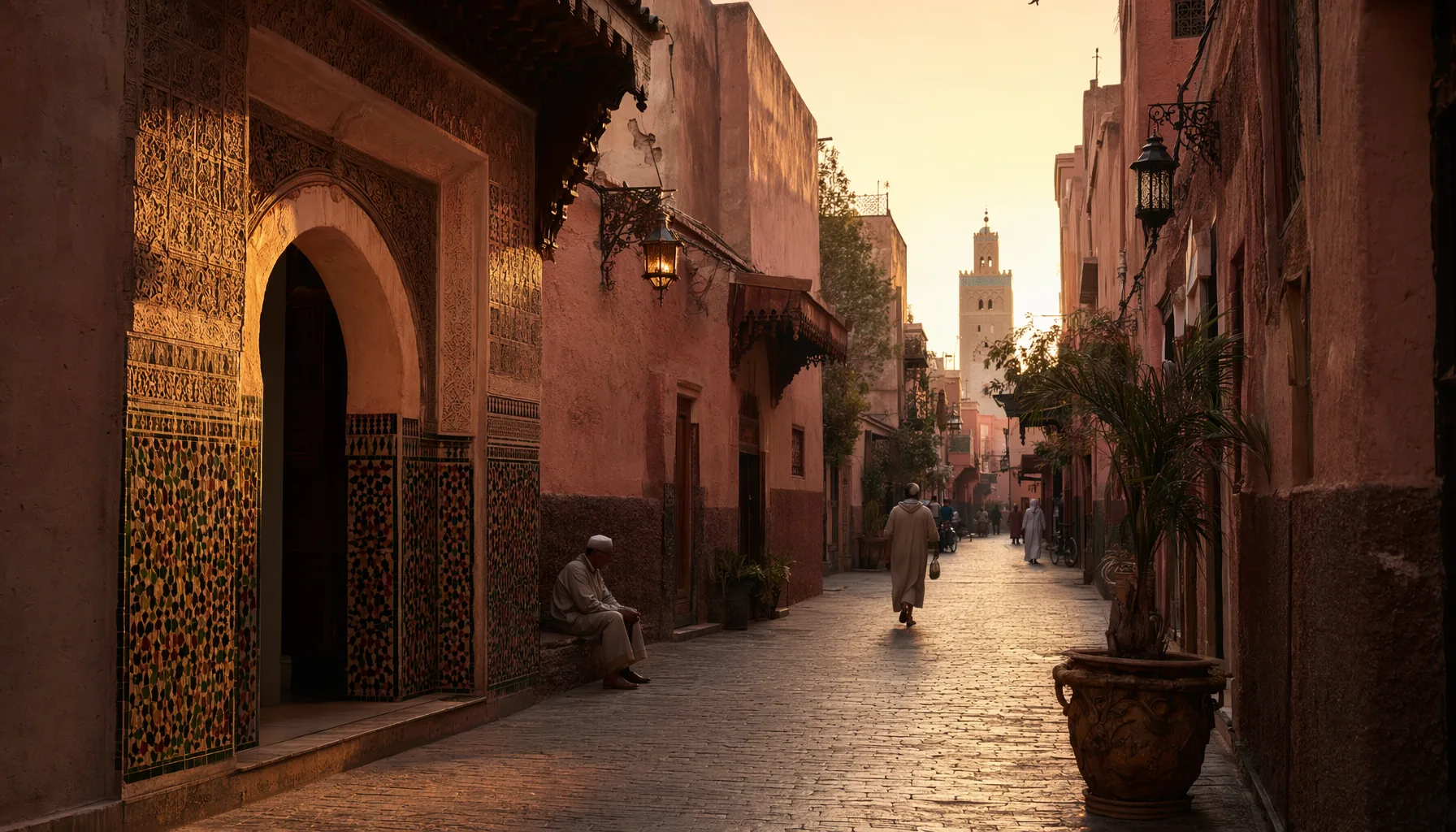
Ramadan: what's changing (nothing mandatory, but some considerations)
Ramadan falls on different dates each year (it moves forward by about 11 days per year in the Gregorian calendar). Based on the 2026 calendar, it falls around the end of February to the beginning of March, but the exact date can vary depending on the sighting of the moon.
What changes in practice for attire: not much formally. There is no dress code during Ramadan, no additional legal rule. But the context is different. In a city where the vast majority of the population fasts from sunrise to sunset, the day is quieter, some businesses are closed, and the atmosphere in public spaces is more internalized than usual.
What many visitors naturally do during Ramadan: dress a bit more modestly, covering shoulders and legs in public during the day. Not because it's required, but because the context calls for it. Shorts and a tank top in a residential neighborhood during fasting hours create a dissonance that's felt on both sides.
In the evening, after iftar (breaking the fast at sunset), the atmosphere changes completely. The streets come alive, restaurants open their doors wide, families go out, and the medina is at its liveliest. There, normal evening attire is perfectly suitable without any issue.
Tourist restaurants remain open during Ramadan, even during the day. You can eat, drink, and smoke in these areas. Simply put, eating or drinking in the street during the day is frowned upon. It's not directly a matter of attire, but it's in the same vein of paying attention to the context.
During Ramadan, the idea is not to disguise yourself. It's just to be a little more mindful of the context around you.
Religious sites and specific contexts
The question of religious sites in Marrakech is often phrased as «Do you need to cover up to visit mosques?». The answer is simple: the Koutoubia, Marrakech's most iconic mosque, has been closed to non-Muslims since 1912. It's not a matter of attire: you don't enter, no matter what you wear.
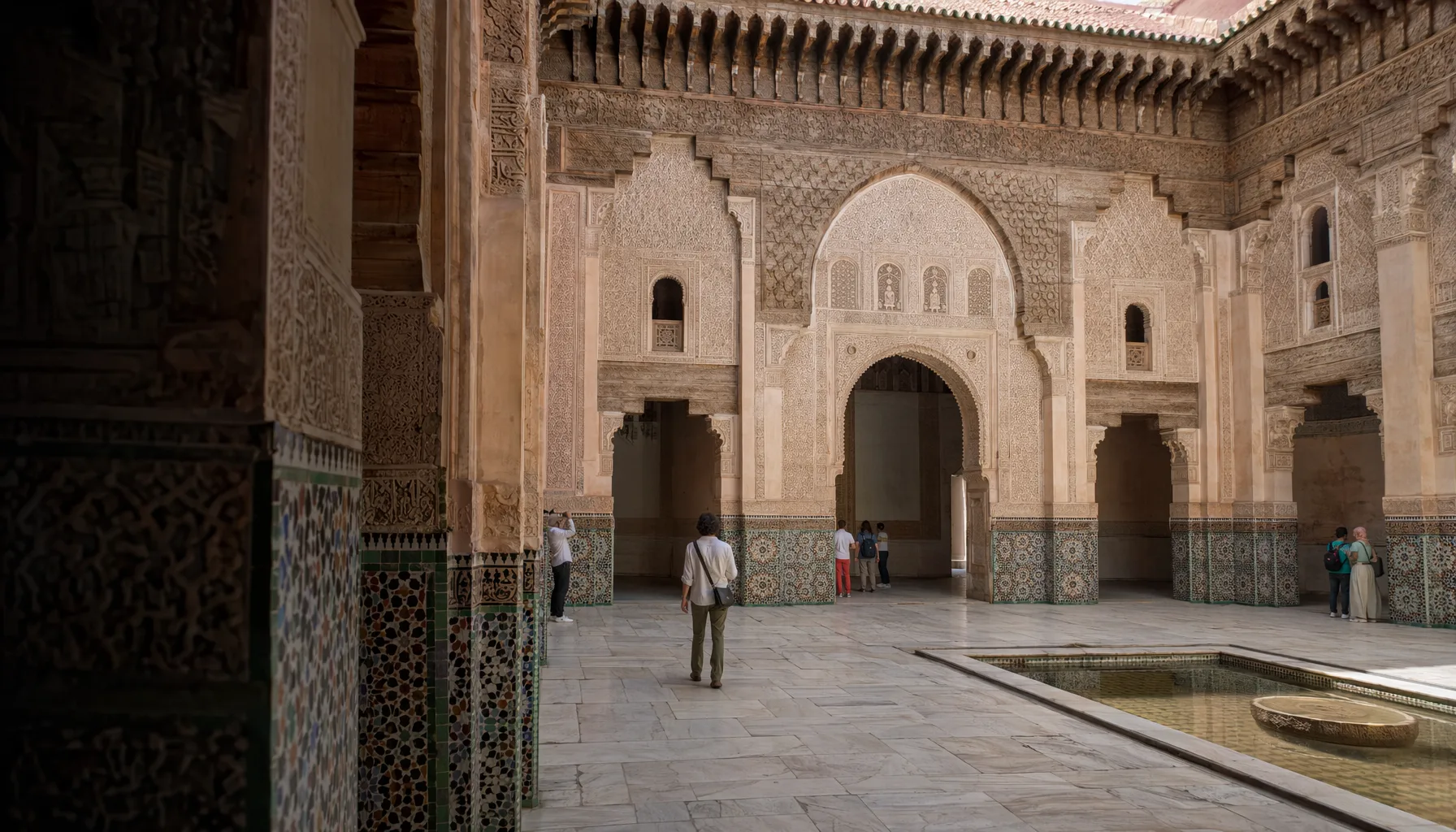
The sites accessible to non-Muslims in Marrakech are mainly palaces, gardens, and madrassas. The site that requires the most attention to clothing is the Ben Youssef Madrasa, a historic prayer and study space converted into a museum. Upon entry, you will be asked to cover your shoulders and knees if you are not already. Stoles and sarongs are available on-site for both sexes if needed. This is not dramatic to anticipate.
For other major tourist sites (Bahia, El Badi, Majorelle, Menara, various museums), no specific dress code is applied beyond the usual sense of decency. We saw people in shorts at the Yves Saint Laurent Museum and no one seemed to mind.
Hammam baths open to tourists have their own rules depending on whether it's a traditional hammam or a riad spa. In traditional hammams, one generally wears a swimsuit or underwear. High-end riad spas operate like European spas. It's advisable to inquire beforehand if you're unsure which category your chosen establishment falls into.
For ceremonies or semi-private spaces (weddings, parties where you might be invited as a guest), the same principles apply: a bit more coverage than the minimum tourist look, and you adapt to what other guests are wearing around you.
Shoes: underestimated, but important
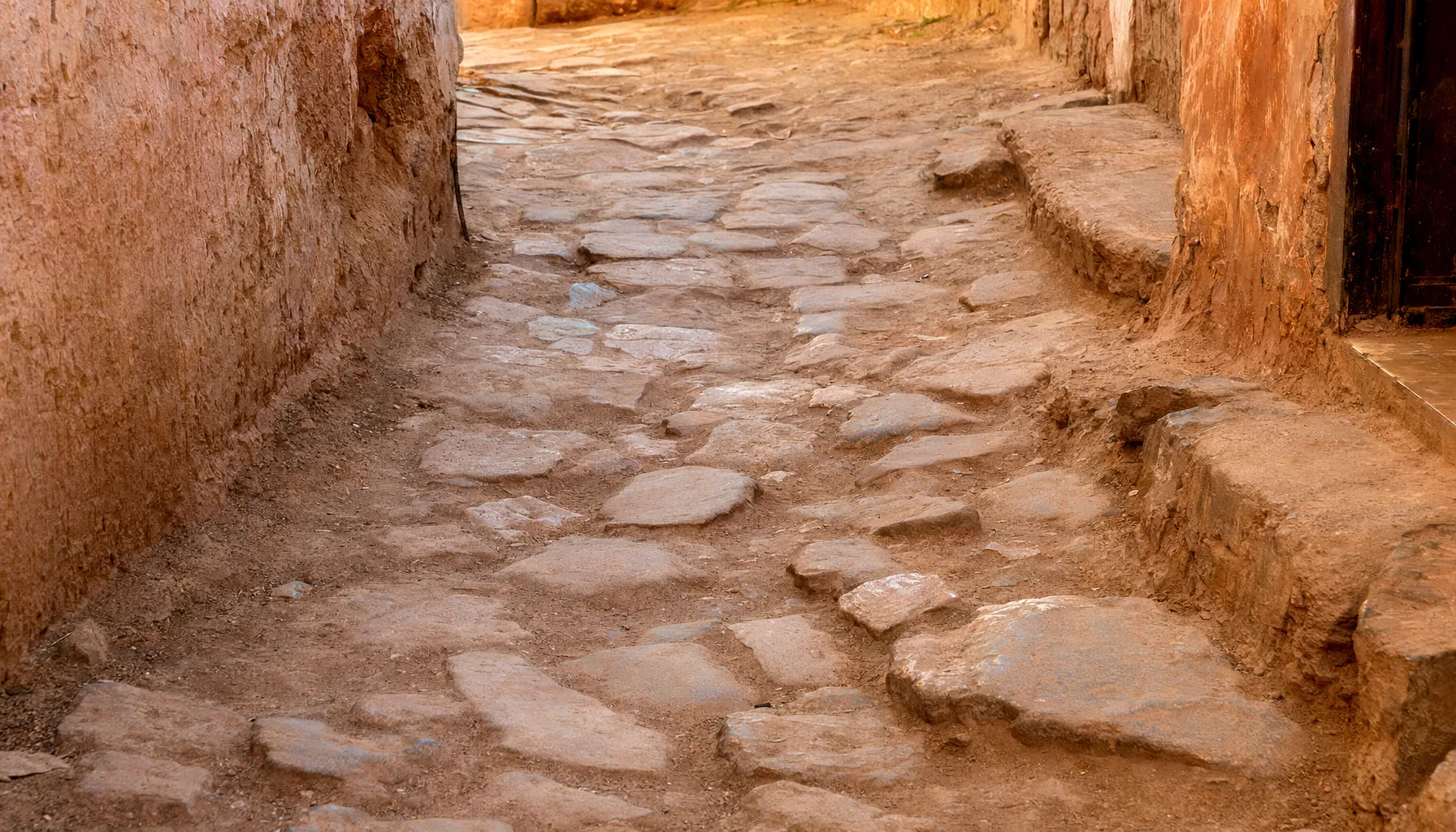
The issue of shoes in Marrakech is less discussed than that of clothing, but it deserves its own section. The medina is traversed on foot, on irregularly paved alleyways with stones of all sizes, compacted earth floors, narrow passages, and unexpected inclines. It's a city beautifully unsuited for certain types of footwear.
No heels in the medina. Never. It's a no. Stiletto heels on the medina's cobblestones mean either a sprained ankle, getting your heel stuck between two stones, or both. Wedge heels aren't much better. People who try it systematically regret it after 20 minutes. Flat ballet flats are okay, but they get dirty quickly and offer little support for a long day of walking.
What works: chunky-soled sandals with back straps (so your foot stays in on rough patches), lightweight sneakers, lightweight walking shoes. Beach flip-flops are poor for the medina: they slip, offer zero support, and the alleys aren't always clean.
Excursions in the Atlas or Agafay require proper hiking boots if you stray from the passable roads. Lightweight athletic shoes are sufficient for an average tourist program (villages accessible by car or camel). Real hiking boots are needed for anything involving walking on Atlas trails.
In riads and some restaurants, you may be asked to remove your shoes at the entrance. This isn't always the case, but it does happen. Shoes that are easy to slip on and off have a practical advantage.
A few common (and easy-to-avoid) fashion mistakes
We see them regularly, they are easy to anticipate, and the people concerned often realize it themselves quite quickly on site.
The white dress in the souks. Aesthetically very attractive in Instagram photos. In practice, the souks are dusty, the dyers in the medina release colors, and some passages are narrow. A white dress rarely comes out of the medina still white. It's not a crime, but it's a choice to make with full knowledge of the situation.
Beach flip-flops in the medina. We mentioned them in the shoe section, but they deserve a line here too. Five hours of walking on the medina's cobblestones in beach flip-flops is a mistake you only make once.
The halter top or very short crop top in the souks. It attracts attention and unwanted solicitations that could have been avoided. There's no formal prohibition, but the day's experience is affected.
Forget a warm layer in November. November in Marrakech can be 26°C at noon and 10°C at 7 PM. People often find themselves stuck in a restaurant waiting for it to warm up, or buying a jacket in the souks at a tourist price because they hadn't planned ahead.
Heels in the medina. Repeated twice because it really happens.
Tight synthetic pants in the summer. In July, when the temperature is 42°C (107.6°F), polyester skinny jeans are a decision you'll regret by 11 AM. Lightweight, loose-fitting fabrics aren't just a suggestion; in the summer in Marrakech, they're a matter of functional comfort.
Overdressed for an excursion. Some visitors arrive at a riad in city clothes and leave the next day for a hike in the Atlas Mountains in ballet flats and a dress, because they hadn't anticipated that «mountain excursion» meant rough terrain, not a stroll along a boulevard.
FAQ
How to dress in Marrakech as a woman?
In tourist areas (Gueliz, Hivernage, riad terraces, Jemaa el-Fna), a light dress, loose trousers, or jeans are perfectly fine. In residential medinas, away from tourist routes, covering your shoulders and wearing mid-calf length clothing is more comfortable. There are no absolute rules, but the difference in context is real depending on the neighborhood.
Should one dress modestly in Marrakech?
Not necessarily. In tourist areas, light clothing is common and no one pays attention. In residential areas of the medina or in neighborhood markets, a bit more coverage makes the visit more comfortable. It's not a matter of law or formal rule; it's a matter of local comfort.
How to dress in Marrakech in the summer?
In summer, the heat is real (38 to 45°C in July-August). Light, loose fabrics, in linen or cotton, are essential. A light, long dress or loose pants cover the legs while allowing them to breathe. Avoid synthetics. A light scarf in your bag can cover your shoulders if needed, without weighing much.
How to dress in Marrakech in winter?
Winter in Marrakech is colder than one might anticipate. During the day, under the sun, it's 18 to 22 °C in December-January. In the evening, it drops to 5 or 8 °C, sometimes less. A light coat or warm jacket for the evenings is essential. Riads are often poorly heated. Dress in layers: t-shirt, sweater, jacket, with the possibility of removing layers as the day goes on.
What to wear in Marrakech during Ramadan?
During Ramadan, a bit more discretion is appreciated, especially during the day. It's not a legal obligation, but in a city where the majority fasts, covering your shoulders and wearing mid-calf length skirts or trousers in public spaces is a simple gesture. Tourist restaurants remain open. In the evening, after breaking the fast, the atmosphere changes completely.
Can you wear shorts in Marrakech?
In tourist areas (Gueliz, Hivernage, gardens like Majorelle), shorts are fine. In the souks and residential medina, it's possible but it attracts attention and can sometimes lead to persistent hassle. Shorts that go below the knee are better accepted than beach shorts. Light trousers in a bag remain the most discreet option.
Can I wear a bikini in Marrakech?
A bikini is perfectly acceptable in the pools of riads, hotels, and on private terraces. That's the designated space for it, and no one will find fault with it. Outside of these areas (streets, souks, Jemaa el-Fna), no. It's not a matter of tolerance; it's simply that the context is radically different.
Is a scarf necessary to visit Marrakech?
No, not generally. A scarf can be useful for entering certain sites (Ben Youssef Madrasa provides them at the entrance if needed), for sun protection, or for quickly covering your shoulders in a more residential setting. But it's not a mandatory accessory in Marrakech. The Koutoubia, it should be remembered, is closed to non-Muslims.
To finish
If we had to summarize in one line: In Marrakech, you dress as you would for a vacation in a Mediterranean city, with an extra light sweater in the evening outside of summer, and a bit more coverage when leaving the tourist areas. The rest is about comfort.
The two variables that are truly worth considering before you go are the season (the winter-summer temperature difference is considerable, and preparation errors are frequent) and the day's itinerary (a day in Gueliz and on a riad terrace does not have the same requirements as a day in the residential souks followed by an excursion to the Ourika).
To organize your stay beyond the question of clothing, two useful readings: Neighborhoods to prioritize based on your trip, which gives a concrete overview of the different areas of the city, and What season to come to Marrakech, to calibrate expectations according to the time of year.