




Sleeping in the Marrakech Medina at Night. What It’s Really Like, Safety Included
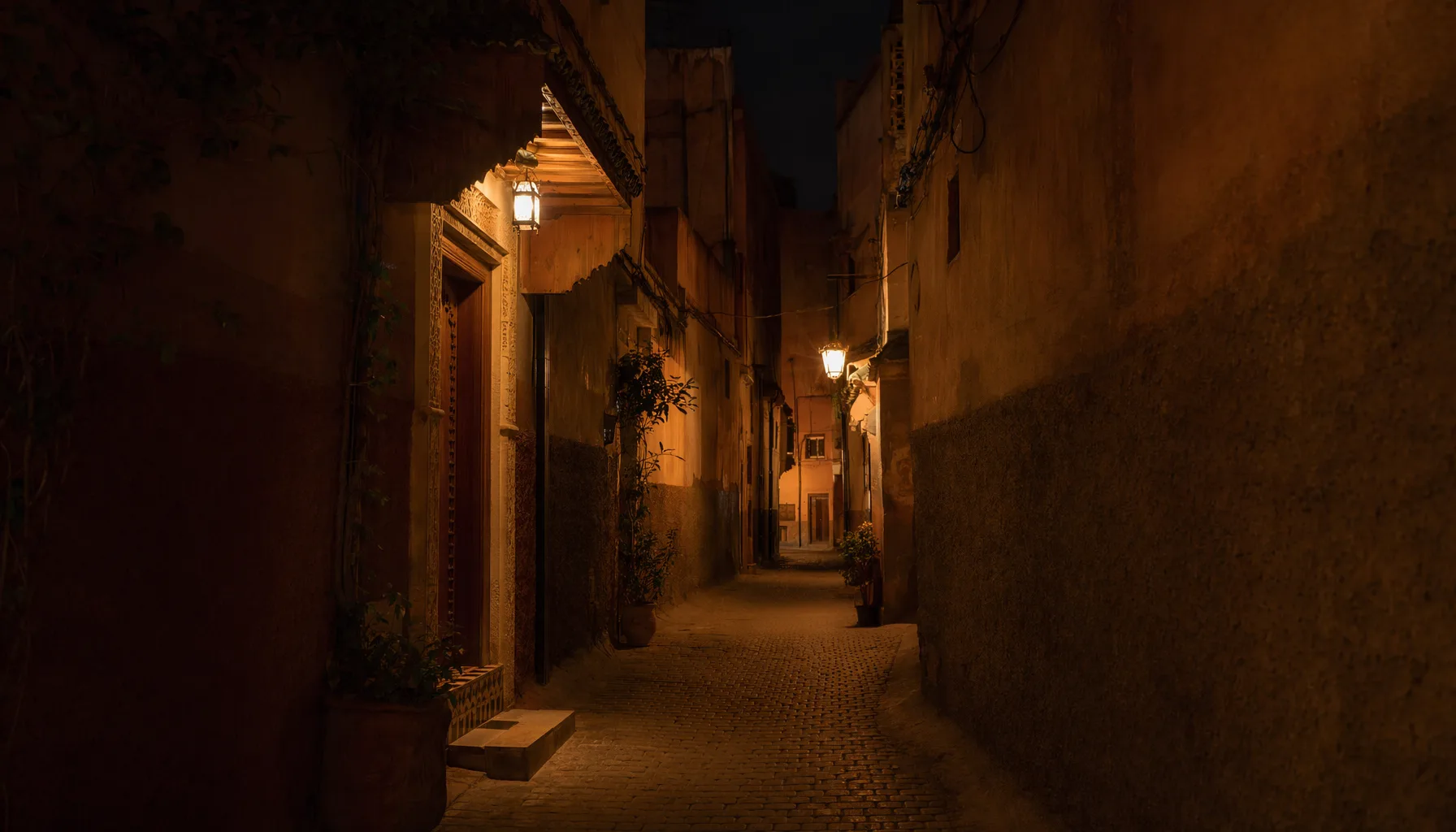
Sleeping in the medina at night: the real experience
We are often asked if the medina at night is quiet. The honest answer is: yes, in the sense that almost nothing happens. But it's not the same «nothing» as in Europe. There are sounds, there is a call to prayer at 4 am, there are very dimly lit alleys in places. It is quiet and exotic, at the same time. The article tries to be precise about both.
Most articles that answer this question pick a side: either the medina is presented as slightly worrying, or you're told it's like Montmartre after 11 PM. Both stances miss the true picture. The medina at night is not a tense neighborhood. Nor is it an ordinary European quarter.
The reality: the souks close around 9-10 PM. Restaurants and Jemaa el-Fna stay lively until 11 PM - midnight. After midnight, residential alleyways are quiet and not very crowded. Locals return home at all hours. Tourists too. Almost nothing happens. But the sensory landscape is different from what we know: less light, more acoustic intimacy, a feeling of isolation even when you're not really alone. Some travelers love it immediately. Others get used to it in two nights. A few never do.
We're going to review what it really entails, sound by sound, alley by alley, to make an informed decision.
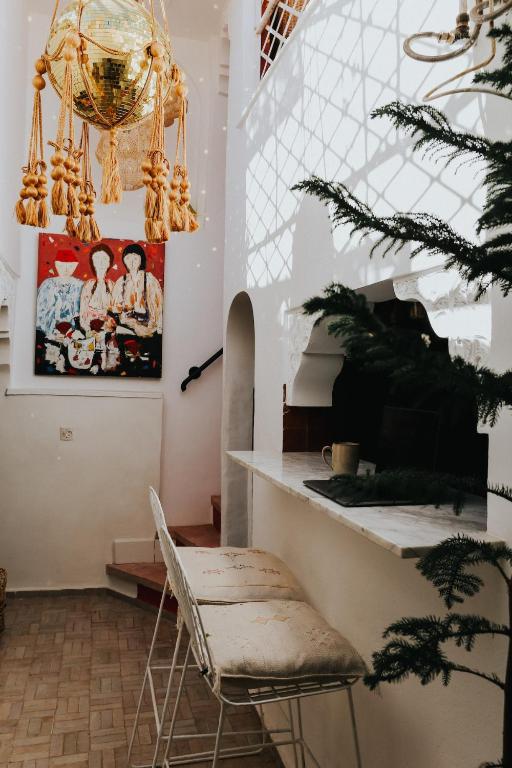
Sounds: what you hear at night in a Riad in the Medina
The medina is noisy. Not deafening, but noisy. Here's what you hear, hour by hour.
Between 6 PM and 7 PM, depending on the season, it's sunset time and, during Ramadan, iftar time: bursts of families in the alleyways, cooking smells, doors opening. A lively, brief hour, then things settle down.
Between 7 PM and 11 PM is the evening peak. Restaurants are operating at full capacity. Scooters pass through the wider alleys. The terraces of neighboring riads let the voices of other travelers filter through. The interior patios of the riads amplify the sound: if the neighboring riad has noisy guests on the terrace, you'll hear them in your room. This is a consequence of the open courtyard architecture, not a flaw in the soundproofing of the chosen riad.
Between 11 PM and 4 AM, the medina is truly silent. Not a church silence, more like the silence of a sleeping residential neighborhood. Sometimes you can hear voices from above, in a neighboring riad. Sometimes a scooter passes in the distance. Sometimes a door closes in the alley. Generally, you can hear your own footsteps. That's about it. For travelers worried about constant noise, this nighttime stretch is often a pleasant surprise.
Around 4:15 AM in summer, 5:00 AM in winter: the Fajr call to prayer. It's the defining sound of a stay in the medina. It penetrates all walls. All of them. It lasts 2 to 4 minutes. Most travelers find it striking the first night, disruptive the second, then forget about it from the third night onwards. Some never get used to it. We will revisit this in a dedicated section, because it's the first thing you need to know before booking a riad.
From 6 AM, the city comes back to life. Carts, scooters, merchants' calls as they set up their stalls, the melody of the morning muezzin. Around 8 AM, it's full throttle. A riad with an open patio easily lets all of this in.
Common mistake: thinking you can find a «quiet» medina riad. None of them are completely silent. The right reflex is to choose a riad tucked away in a less-trafficked derb, not to look for the total absence of noise.
Light: How the Medina Lights Up at Night
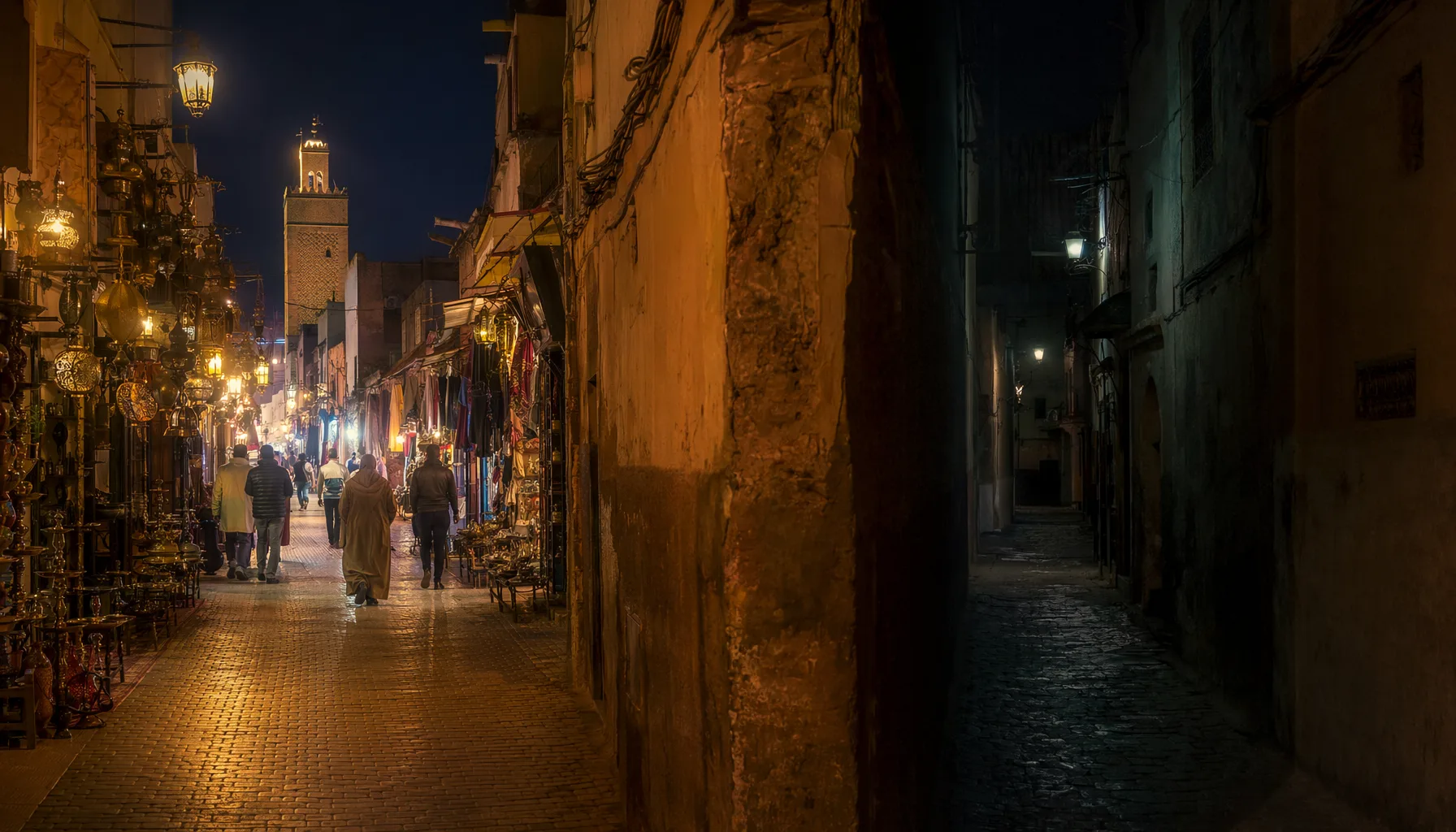
The medina at night is not plunged into total darkness. Nor is it uniformly lit. There is a very clear hierarchy, and knowing it before returning to the riad for the first time changes everything.
The main thoroughfares, Rue Riad Zitoun el Jedid, Rue Mouassine, Rue Bab Doukkala, and the immediate surroundings of Jemaa el-Fna, are lit by streetlights and storefront lanterns. Visibility is good there. You can easily encounter locals and tourists there until midnight. Returning to these thoroughfares at any reasonable hour poses no orientation problems.
Side alleyways are darker. A few lanterns at the entrance of the riads, otherwise little artificial light. Using your phone as a flashlight is normal, not a sign of panic. We do it, residents do it too.
Deep residential cul-de-sacs, those that lead nowhere but to the homes of the people who live there, are very poorly lit after 11 PM. Quiet, silent, and dark. It’s not a question of safety: residents enter them at all hours without problems. It’s a matter of recognition. A cul-de-sac one doesn’t know during the day becomes very difficult to identify at night.
Useful reflex: on the first evening, make the trip from the riad to Jemaa el-Fna in broad daylight. Measure the time. Identify the critical turns: recognizable mosque doors, the color of a wall, a fountain. Making the same trip in the evening becomes automatic.
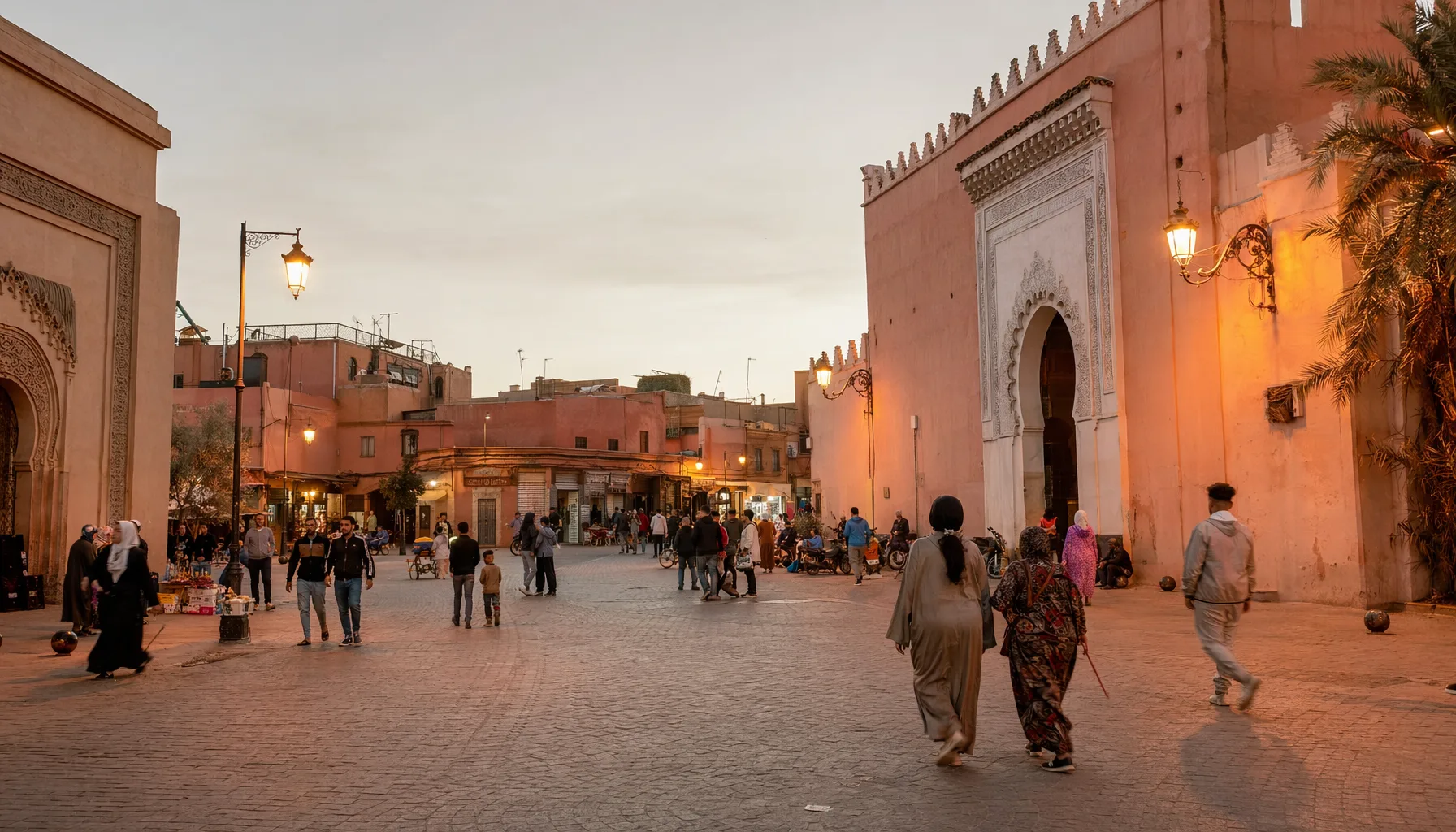
Actual Security: What Happens, What Doesn't Happen
The Moroccan medina is not an urban crime zone. It is an old residential district with a high tourist flow. Scams exist, violence almost not at all. The real risk for an ordinary traveler returning home after dinner is very low.
What happens regularly: nothing notable. The vast majority of tourists returning to their riad from a Medina restaurant between 10 p.m. and 11 p.m. do so without any incidents. That is the norm.
What happens sometimes: someone approaches to ask if you're lost. Sometimes it's genuine kindness. Sometimes it's the start of a scam where they expect payment. The trick is simple: reply «Thanks, I know where I'm going» without stopping, even if it's a slight untruth. As for Security in Marrakech as a whole, classic scam schemes are detailed in the comprehensive guide.
What rarely happens but is worth knowing: a phone held out at arm's length in a narrow alley can be snatched by a scooter-riding passerby. It's rare, and the fix is simple: phone in your pocket or held close to your body, not at waist height with your arm extended. Pickpockets also exist around Jemaa el-Fna in crowded areas, but that's a crowd issue, not a specific nighttime problem.
What doesn't happen at significant rates: physical assaults in residential neighborhoods, street violence, being targeted for being in the wrong place. These scenarios are so marginal that they do not structure the real risk of a normal stay.
The only universal reflex that's worthwhile: walking with an apparent direction. Even when lost, move forward at a steady pace. Someone who seems to know where they're going attracts much less attention than someone who stops, consults their phone, and looks around.
Women alone in the medina at night: honesty
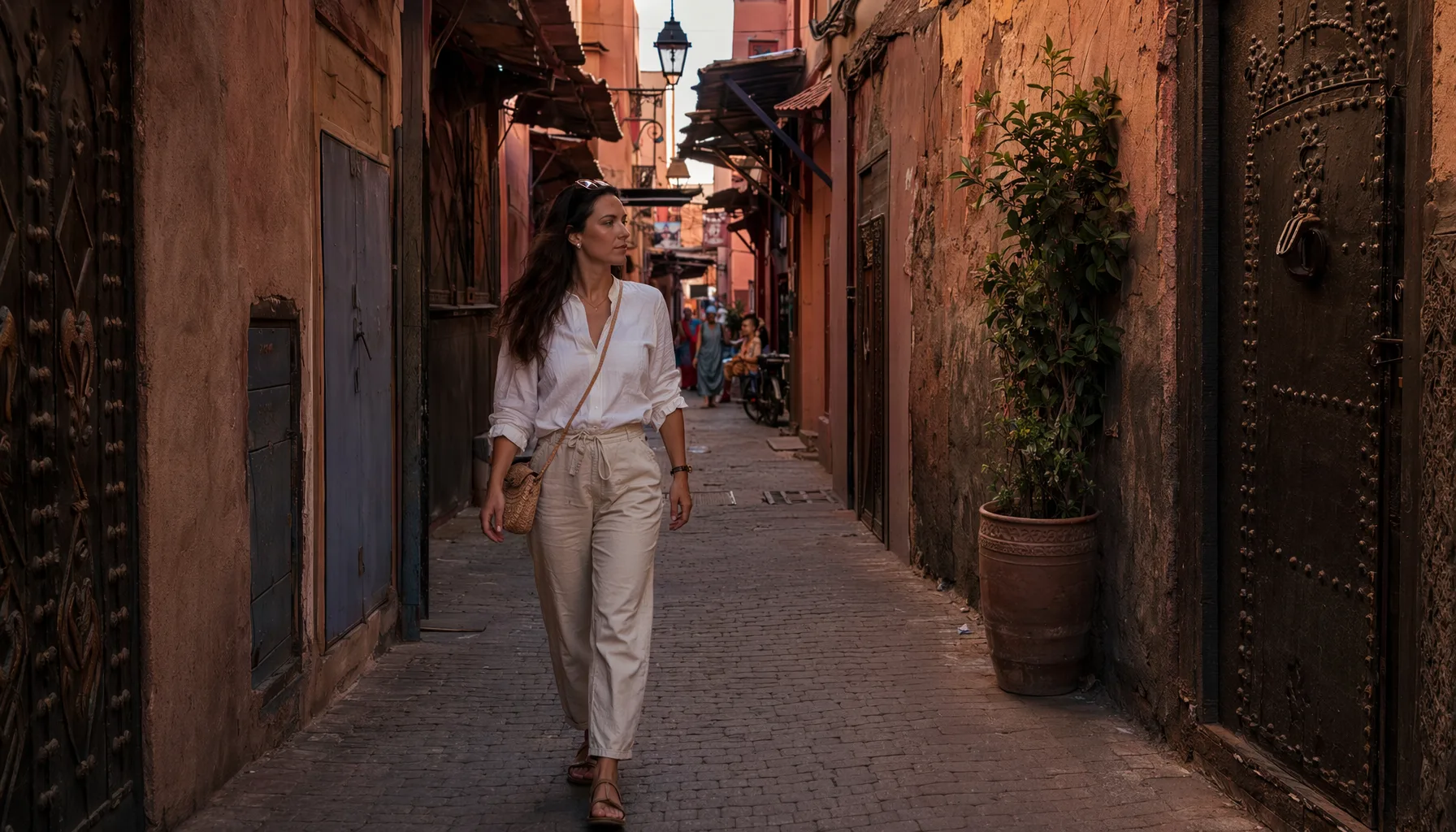
For a woman alone at 11 PM in a main alley of the medina, nothing serious will happen. The physical risk is very low. What can happen is street harassment: a lingering stare, a remark, sometimes someone following for a few meters to see if you're lost or to offer help that turns into a request for money. Unpleasant. Not a threat to your stay. Repeatedly, it wears you down. Once per evening, ignore it. Three times in 50 meters, you start to wonder if Gueliz wasn't the better choice.
The Marrakech medina at 11 PM is not Lyon at 11 PM. It's also not a truly hostile neighborhood. It's its own thing. The frequency and intensity of interactions vary depending on the derb, the time of day, and the evening's circumstances. Some nights, nothing. Other nights, three little things in 20 minutes. There are no hard and fast rules.
What concretely helps, without driver's education lectures:
Walk with a determined stride, even when you hesitate. Stopping in the middle of a narrow street to check your phone is a visible signal. It's better to go into a café to look at the map.
Get the riad's WhatsApp number. Most will send someone to meet you at the nearest illuminated point with just a message. This service is free and turns a late return into an ordinary trip.
For dinners that end after 10 PM in Gueliz or outside the medina: taxi to the nearest medina gate (30 dirhams), then the short, familiar alleyway to the riad. For returns after midnight: taxi to the gate, no geographical improvisation in an area you don't yet know.
Completely avoiding the medina in the evening means missing half the experience. The right approach isn't avoidance, it's informed adaptation.
If an honest reading of the above makes you want to walk away, Gueliz exists and is not a failure. If she confirms that it's manageable, we'll do what most female travelers do: adapt, enjoy, and come home.
Coming home late: good habits
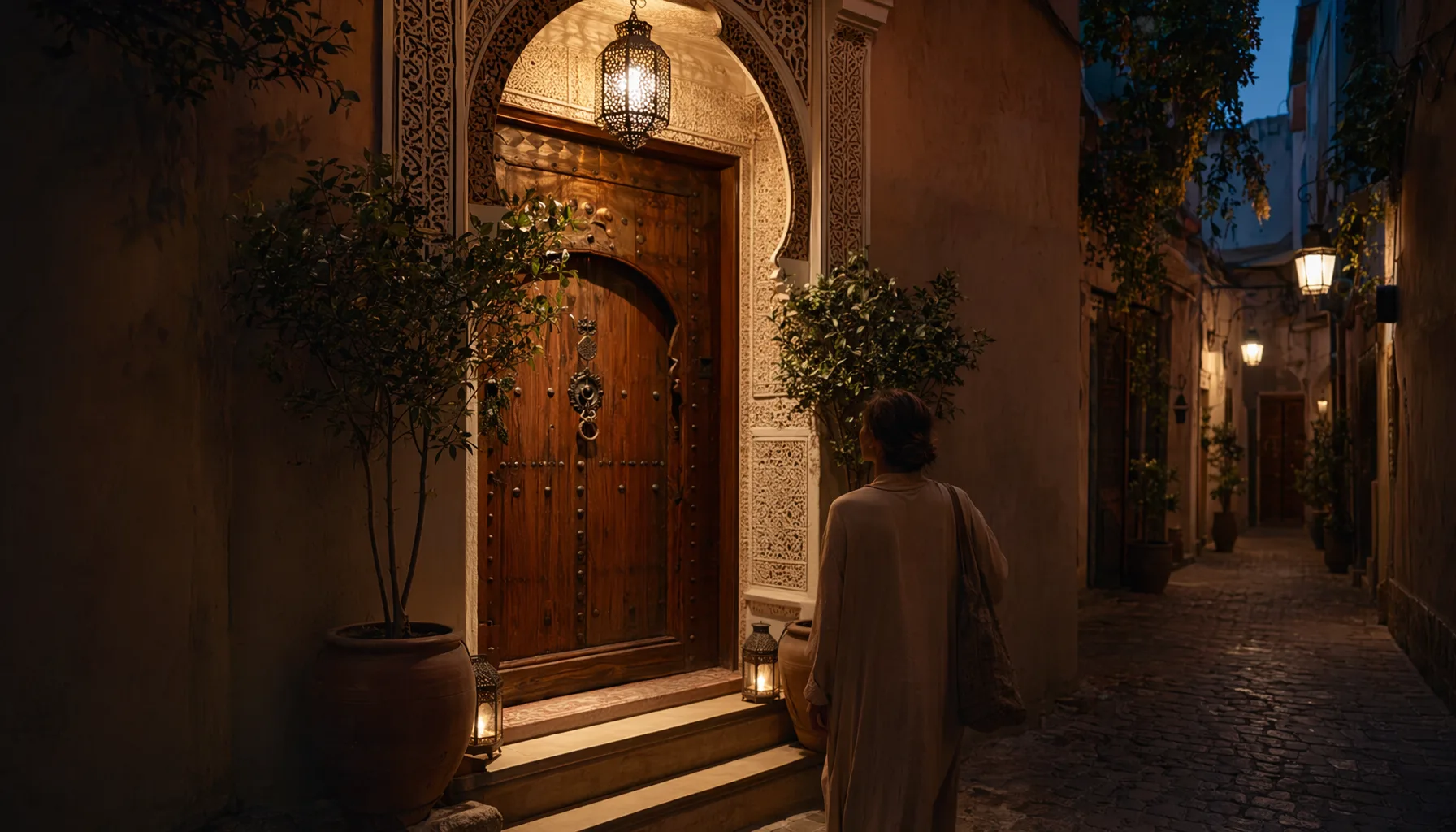
Walking back from Jemaa el-Fna until 11 PM - 11:30 PM: On the main thoroughfares, it's the usual return. The typical riad-Jemaa el-Fna journey takes 5 to 15 minutes depending on the location. For a couple or a group, there are no particular issues. For a solo woman: the journey on the main thoroughfares remains manageable, it's the last segment in a dimly lit alley that warrants anticipation.
Returning from Jemaa el-Fna after 11:30 PM: the main roads are still okay. If the riad is in a dimly lit alley, there are two options: take a taxi to the nearest medina gate and from there walk for 3 minutes along a short, familiar stretch, or WhatsApp the riad so a staff member can meet you at the nearest well-lit point.
Taxi from Gueliz: 30 to 50 dirhams depending on the distance. The driver will drop you off at the medina gate closest to your riad: Bab Doukkala, Bab Laksour, or Bab Ighli, depending on the area. From there, it's a 3 to 10-minute walk. Insist on using the meter or a fixed price negotiated before getting in, not upon arrival.
Late night arrival from the airport: direct taxi to the medina gate, 100 to 150 dirhams. Ask your riad to have a staff member pick you up at the gate. Walking with luggage through dark alleys at 11 PM is never the best way to start exploring an unfamiliar neighborhood.
The WhatsApp reflex: most riads are reachable 24/7 on WhatsApp. A message like «I'll be there in 10 minutes» often prompts someone to come out and meet you. This service is very valuable and is not charged.
The call to prayer: what you need to know
The call to prayer for Fajr is the first thing to know before booking a riad in the medina. It's the number one subject of negative reviews for riads in Marrakech, and it's a structural reality of the neighborhood, not an isolated incident.
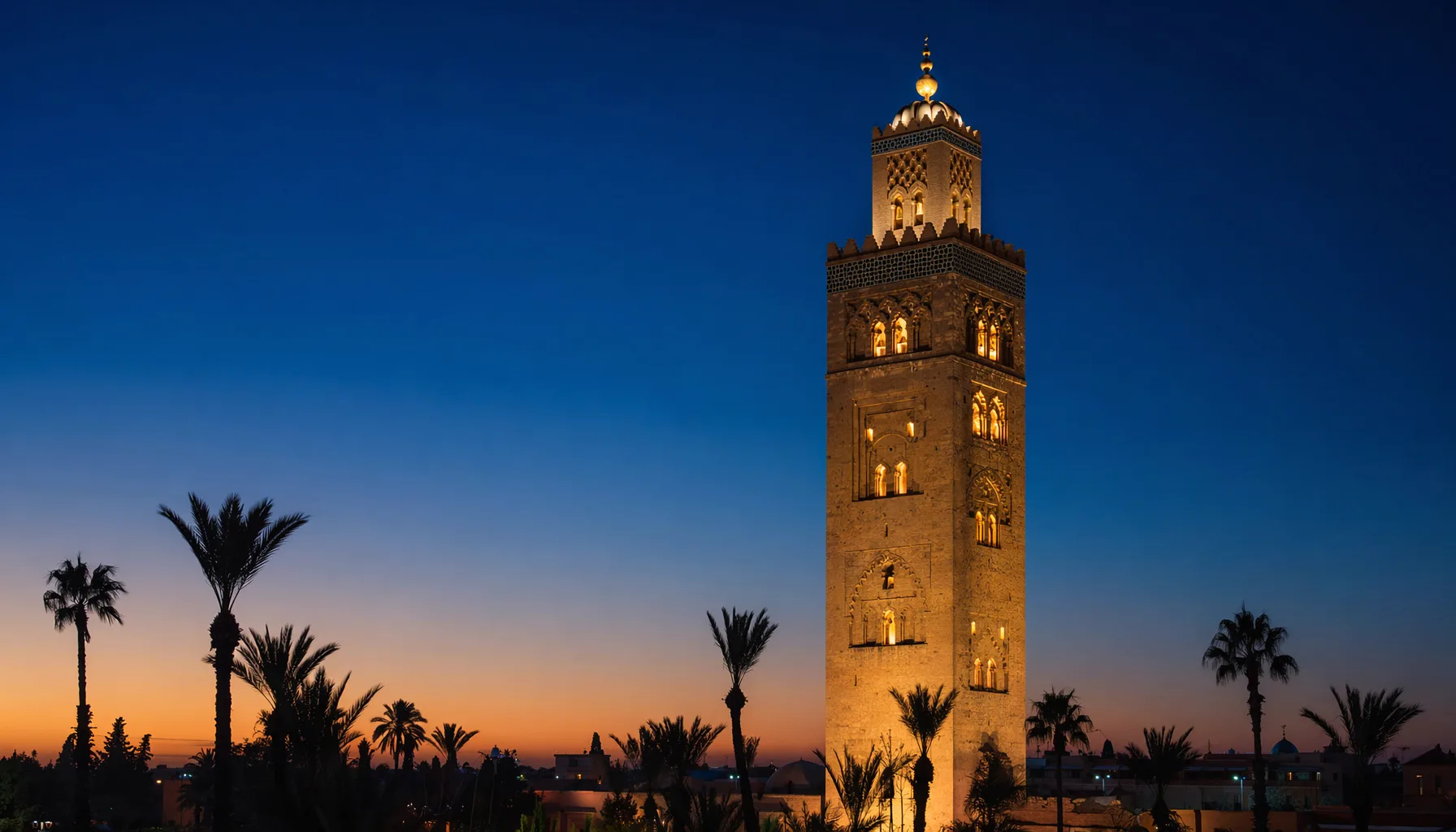
Here are the facts: five calls per day. Only Fajr, the dawn call, affects sleep. It occurs between 4:15-4:30 AM in the height of summer, around 5:00 AM in winter, with week-to-week variations according to the calendar. It lasts 2 to 4 minutes. It penetrates all walls, coming from the loudspeakers on the minarets. A riad 30 meters from a mosque hears it very loudly. A riad 200 meters away hears it more faintly, but still hears it.
Practical solutions are simple. Wax or foam earplugs: inexpensive, available everywhere, and for many travelers, they completely solve the problem. Choose a riad marked «far from mosques» and check the distance to minarets on Google Maps satellite. Or get used to it. The majority of travelers who stay more than two nights report that the fajr becomes ambient rather than disturbing from the third night onwards.
No riad in the medina is isolated from the dawn call to prayer. It's a characteristic of the neighborhood, not a flaw of a house. Either you take earplugs or you sleep in Gueliz.
For whom sleeping in the medina at night doesn't work
Honesty also requires naming the profiles for whom the medina is not the right choice. Not as an admission of failure, but as a reasonable calculation.
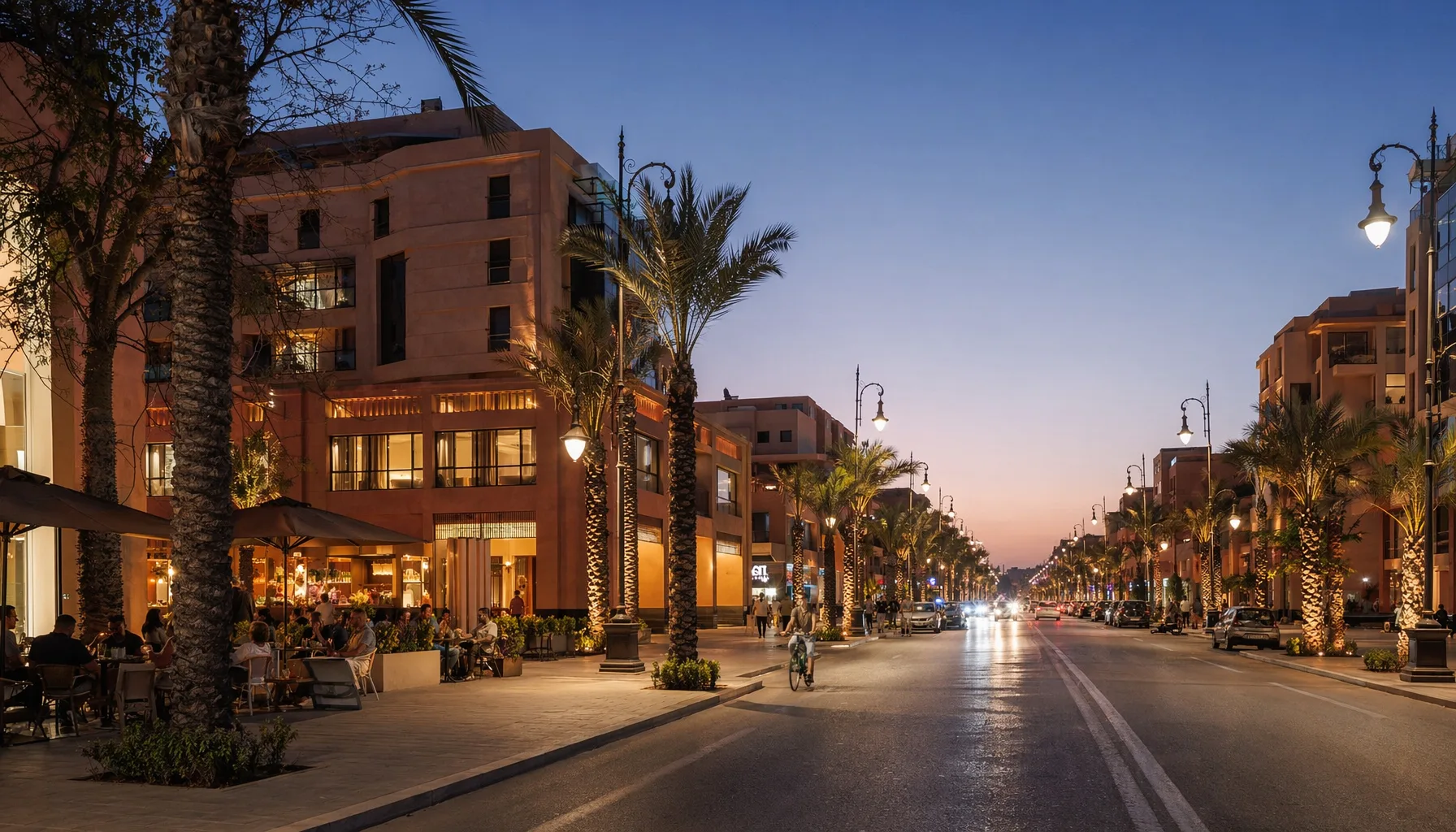
If you are a very light sleeper: Fajr at 4:15 AM will wake you up every morning, even with earplugs if you are particularly sensitive. Gueliz does not eliminate nighttime noise, it makes it predictable: traffic noise, not minaret loudspeakers.
If you are traveling with an infant: the unpredictable noise of mopeds, occasional scooters, and the Fajr prayer all disrupt the baby's sleep, and consequently, the parents' sleep. Hotels in Gueliz offer a more stable sound environment.
If the unknown sensory experience exhausts you: some travelers immediately settle into the medina, others find the change of scenery exhausting for the first two nights. If you are in this second group and your stay is three nights, losing two nights to poor sleep is not a winning calculation.
If you are a single woman and the above has confirmed that you don't want to deal with the described adjustments: that is a perfectly valid choice. The trip is supposed to be enjoyable, and Choose between the Medina and Gueliz based on your profile is precisely what the comparison guide is for. You can also opt for Gueliz in detail if that's the direction your thinking is going.
If you plan on frequent late nights: returning to the medina every evening after midnight from events in Guéliz or Hivernage is possible but tiring. For a trip focused on late nights, a base in Guéliz or Hivernage makes returns easier.
None of these profiles are failures to «enjoy Marrakech.» It's just a calculation of where to sleep. A full day in the medina from a quiet night in Gueliz is also a good combination.
Frequently asked questions
Is the Marrakech medina dangerous at night?
No, in the criminal sense. Violence against tourists in the medina is statistically rare. What people perceive as insecurity is almost always commercial harassment or repeated solicitations, not a physical threat. The medina is a densely populated residential area, active during the day, quiet after midnight. Residential alleys after 11 p.m. are silent and peaceful. The feeling can be strange the first night. Danger in the strict sense is very low.
Is it safe to walk alone in the medina at night?
A lone woman can walk in the medina at night, especially on the main thoroughfares. The experience is different: more intense stares, sometimes remarks, occasionally someone following for 50 meters to see if you're lost. It's not a physical threat, but it's there. The frequency varies depending on the alley, the time, and the crowd. The main thoroughfares remain the most comfortable after 10 PM. For late returns, the riad's WhatsApp number is very useful: most send someone to meet you upon request, free of charge.
What time is the call to prayer in Marrakech?
The call to Fajr, the one that affects sleep, happens around 4:15 AM in the peak of summer and around 5:00 AM in winter, with variations week by week. It lasts 2 to 4 minutes and penetrates all the walls of the medina. No riad completely escapes it. Most travelers adapt to it after two nights.
Are riads noisy at night?
It depends on the riad and its location. A riad on a main road or near a restaurant may pick up noise in the evening. After 11 PM, almost all riads are quiet. The Fajr call to prayer is the only unavoidable nocturnal disturbance. There is no completely silent riad in the medina: choose a less-trafficked derb rather than seeking total isolation.
How to get back to your riad safely at night?
Before 11:30 PM from Jemaa el-Fna, walk along the main thoroughfares. After 11:30 PM or from Gueliz: take a taxi to the nearest Medina gate, then walk for 3 to 10 minutes. The most useful reflex: send a WhatsApp message to the riad before arriving. Most will send a staff member to meet you at the first illuminated point, at no extra charge.
Should I take a taxi to get back into the medina at night?
Not necessarily before 11 p.m. A walk back from Jemaa el-Fna around 10:30 p.m. is common for most travelers. Taxis become the better option after 11:30 p.m., if your riad is in a poorly lit derb, or if you are returning from Gueliz. Taxis drop you off at the entrance to the medina: budget 30 to 50 dirhams from Gueliz, 100 to 150 from the airport.
Is there a time after which one should no longer go out into the medina?
No. The medina does not have a curfew or a security lockdown at a specific time. It's lively until 11 PM easily. After midnight, the alleyways become quiet and less frequented. Going out at 1 AM is not particularly risky, just solitary. Medina residents return at all hours. The only useful adaptation: a phone flashlight for unlit alleyways.
Which medina neighborhoods are the quietest at night?
Deep residential alleyways, far from restaurants and Jemaa el-Fna, are the quietest after 11 p.m. Areas around Bab Doukkala and the Kasbah offer a residential neighborhood quiet as early as 10:30 p.m. Conversely, riads close to the square or on the edge of the souks will hear the city until midnight. These deep alleyways are also the darkest and most difficult to find at night: the quiet must be earned with good knowledge of the route during the day.
To finish
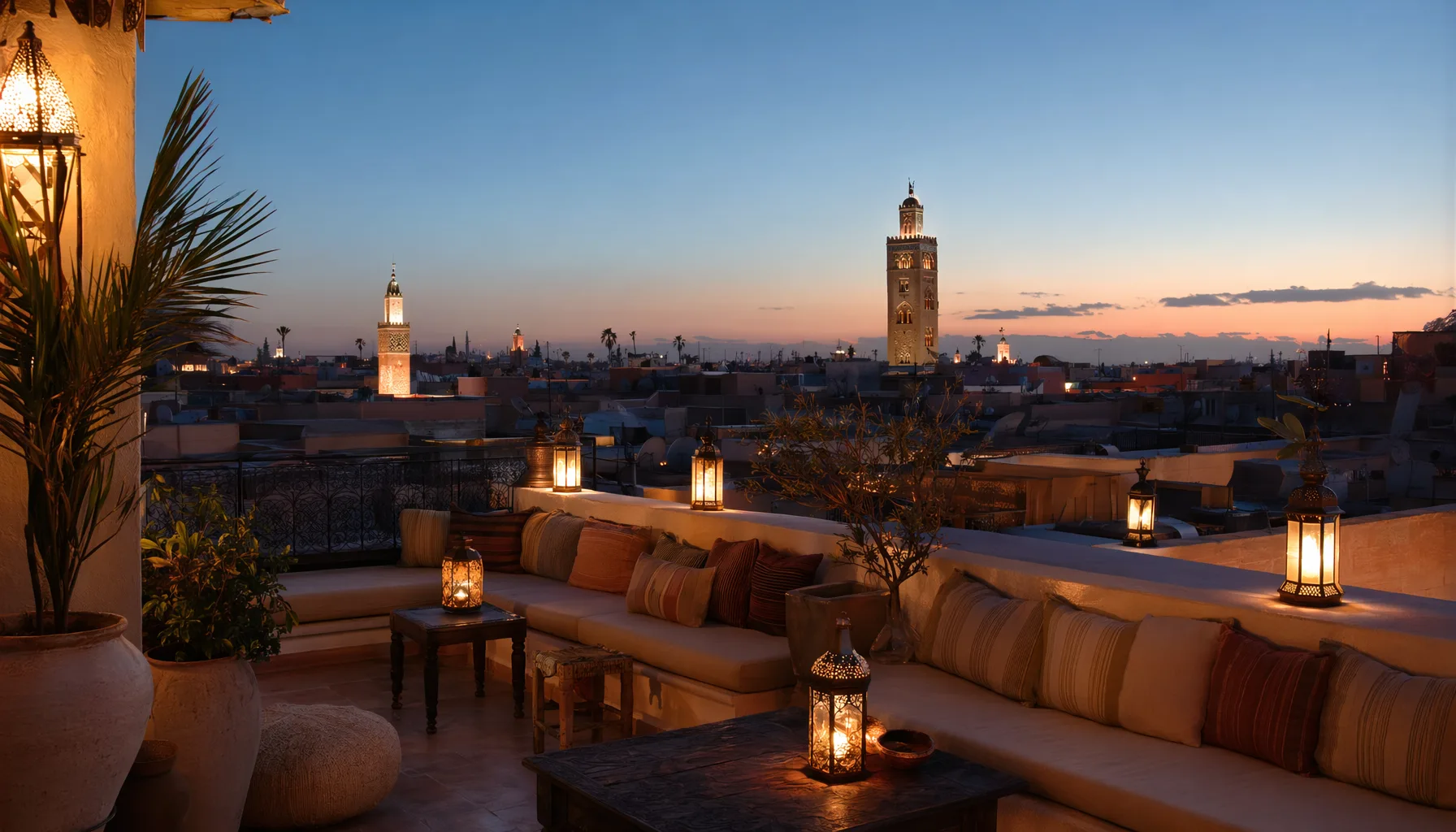
Sleeping in the medina at night calms your traveler's mind into accepting that there will be the unexpected, and that none of this unexpected is dangerous. Once this shift is made, the stay is settled. Before this shift, you sleep poorly. Afterward, you wonder why you would have chosen anything else.
The medina at night is quiet, sensorially different, and honestly not very risky. Travelers who have read the above have the elements to decide. If it raises too many practical questions, Compare the medina and Gueliz in detail helps to decide. And for the broader context of travel, our comprehensive security overview of Marrakech covers what this article doesn't address.
For those who are still hesitating about which neighborhood to choose or what type of accommodation, Our Complete Guide to Choosing Where to Stay in Marrakech covers all angles.