


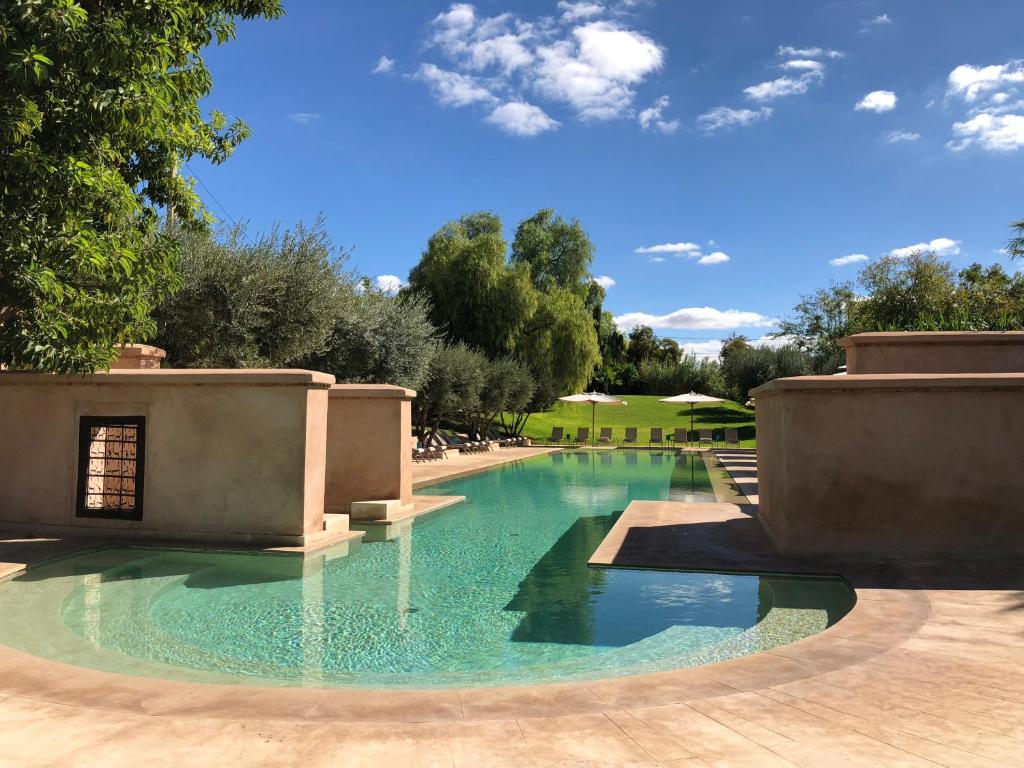
There is no single best month to visit Marrakech. What works for a couple seeking mild spring weather with a terrace and pool won't work for a solo traveler in September who wants low prices and few crowds. And the logic that applies to a hammam stay in January is irrelevant for someone who wants to hike in the Atlas Mountains in April.
What can be said with certainty: spring and fall are the two windows when the majority of traveler profiles will be satisfied. Temperatures are pleasant, days are long, and Marrakech is in full swing. Summer is brutal but manageable with the right accommodation and rhythm. Winter is mild during the day, cold in the evening, and surprisingly calm. Ramadan is a variable in itself that deeply changes the city, regardless of the season in which it falls.
The year has been divided into twelve months, and a verdict is given for each. It also indicates which traveler profiles correspond to each period. The goal is not to sell you a particular period, but to help you decide with all the information at hand.
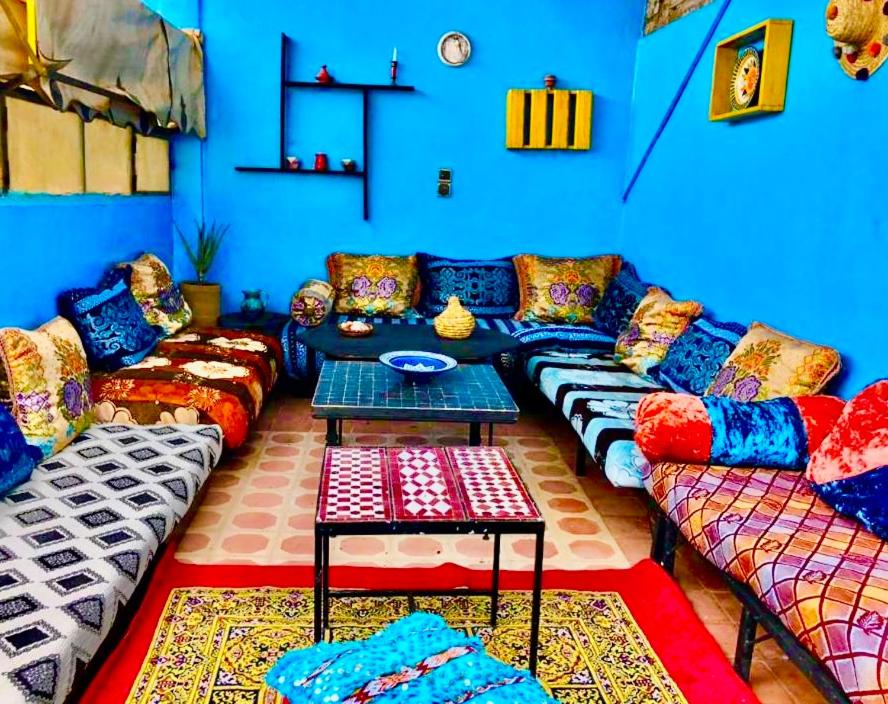
The two ideal seasons: spring and fall
If there's only one piece of information you need to remember, it's this: March to May and October to November are the two windows when Marrakech is at its best for the vast majority of travelers. Pleasant temperatures, flattering light, and outdoor activities are all possible. The rest of the year has its own advantages, but you need to know more precisely what you're looking for.
Spring (March to May)
Springtime in Marrakech has daytime temperatures of 22 to 28°C (72 to 82°F) and nightly temperatures between 10 and 15°C (50 to 59°F). The nights remain cool, but it's a far cry from the winter cold. Jasmine blooms in April, the gardens are at their peak, and flowering orange trees perfume certain neighborhoods in the medina. Days last 12 to 14 hours, leaving plenty of time for everything.
Attendance rises gradually starting in March. The Easter weekend is the annual price peak: riads fill up two to three weeks in advance, and prices can double. If you can avoid Easter, the rest of April remains excellent. May is often the last comfortable month before the heat starts to change the city's rhythm.
The practical side: snow melts on the Atlas passes in April, making high-altitude hikes accessible until mid-April, and then again in the fall. For those who want to combine the medina and the mountains, March and early April are the ideal spring window.
Autumn (October to November)
While spring has a slight advantage in terms of vegetation, autumn clearly wins for light. October in Marrakech offers an end-of-afternoon light quality that photographers know well: long, warm, and low. Temperatures in October range from 25 to 30°C during the day, and 22 to 27°C in November. It's ideal for walking through the medina without feeling overwhelmed.
October is the busiest of the two months: the French autumn school holidays often fall during this time, leading to a slight increase in attendance and prices. November is genuinely quiet. Fewer people in the souks, shorter queues at Jardin Majorelle, riads at more reasonable rates. The Marrakech International Film Festival usually holds its late November session, adding a cultural dimension to the stay.
A reserve for November: early rains are possible, particularly in the form of brief thunderstorms. This is not systematic, but it should be taken into account if you are planning full-day outdoor excursions or trips to the Atlas Mountains.
Month by month: what each period is really worth
January
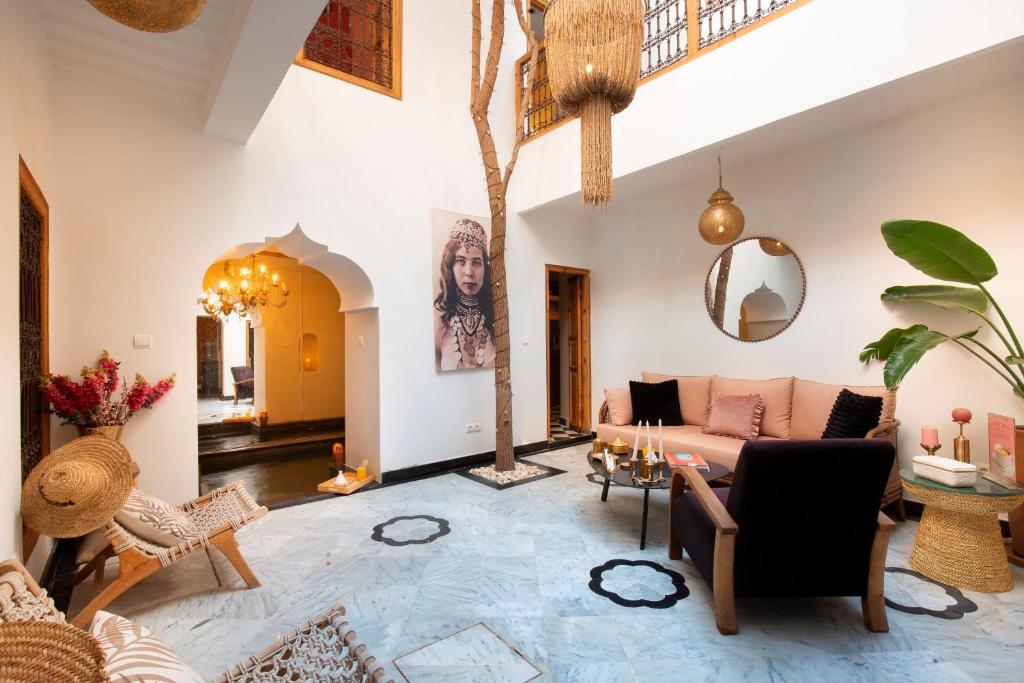
In January, daytime temperatures reach 19 to 20°C, while nights drop to 5 to 7°C. This cold often surprises visitors who expect Morocco to be warm in all seasons: old riads are poorly insulated, large zellige rooms retain the cold, and there is generally no central heating. It is truly hammam season: local demand for neighborhood hammams reaches its peak. For a stay focused on well-being, a riad with a private hammam turn what could be a constraint into a strong point of your stay. Riad Dar Hamid Hotel & Spa, right in the medina, is a prime example: hammam on site, score 9.3 out of 1,173 reviews, luxury category. The medina empties early in the evening. Occupancy is low, except for the New Year's weekend. Verdict: a good month for slow, wellness-focused stays. Avoid if you're looking for a pool or terrace evenings.
February
21°C during the day, 8°C at night on average. Skies are often clear and the February light is photographically interesting, softer than the harsh white of summer. In mid-February, almond trees bloom in the countryside around Marrakech. Valentine's Day weekend causes a price surge in romantic riads, sometimes significantly so. For the rest of the month, it’s the height of the quiet off-season. Verdict: a good month for slow travelers who enjoy a less crowded city and for repeat visitors who already know the must-see sights.
Mars
24°C during the day, 11°C at night. Spring truly sets in from the second half of the month. The days get noticeably longer compared to February. French families start arriving for the school holidays, and the Majorelle Garden fills up quickly. Prices start to climb but remain lower than in April. March is also the last practical month for certain high-altitude treks before the spring rains. Verdict: a very good month, with the advantage of still reasonable prices if you book early.
April
25 to 26°C during the day, 12 to 13°C at night, with occasional peaks above 30°C at the end of the month. High season is in full swing. The Easter weekend is the annual peak of the year: prices can double, and the most sought-after riads are fully booked several weeks in advance. Outside of Easter, April remains excellent: jasmine is in bloom, the light is beautiful, and the days are long. It's the last good month for hiking in the Atlas before the heat sets in at altitude. Verdict: ideal for first-time visitors who can afford high-season prices and avoid the Easter weekend.
May
Daytime temperatures of 29°C, 15°C at night. Afternoons are starting to heat up considerably, and the logic of a siesta begins to make sense: take refuge in the riad between 1 PM and 4 PM, then resume sightseeing in the late afternoon. The souks are lively, and the gardens are still green. It's often a good month for travelers who missed the April window. Verdict: good month, with the caveat that the second half of May is already approaching the summer threshold.
June
33 to 35°C during the day, 18 to 19°C at night. This is the transition to summer. Locals noticeably slow down from midday onwards. Access to a swimming pool ceases to be a luxury and becomes a basic comfort criterion. Hotels in the Palmeraie, with their large green spaces and swimming pools, are starting to make sense for the type of traveler who is willing to stay away from the medina during the hottest hours. Verdict: doable if you plan your day around the heat. Difficult if you plan to walk through the souks all day.
July
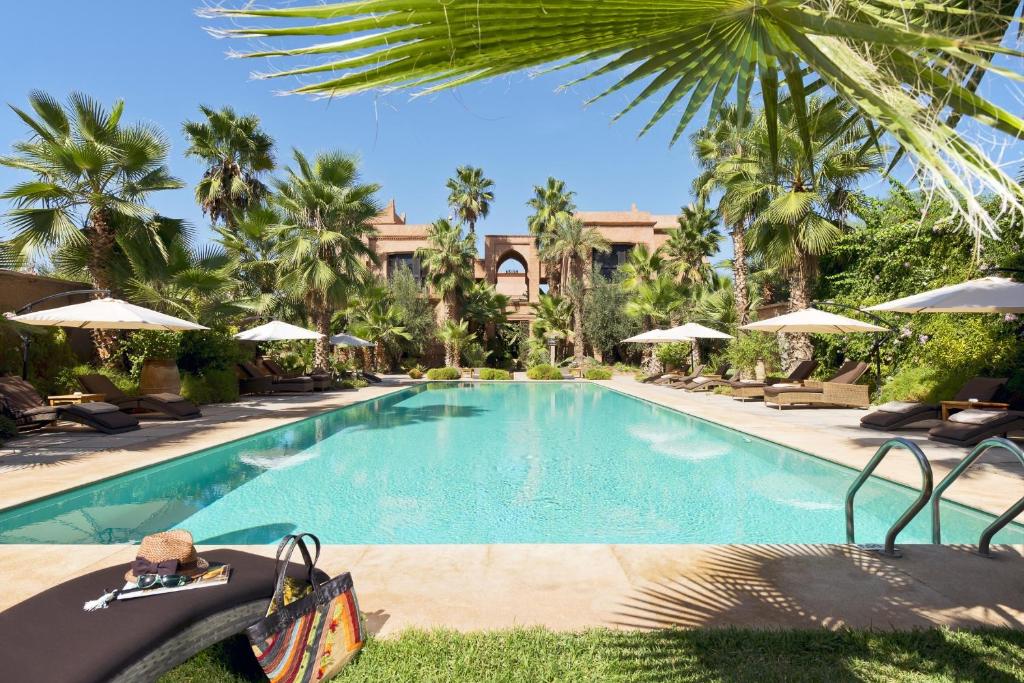
The daily maximum average temperature ranges from 37 to 38°C, with peaks above 40°C during heatwaves, and 21 to 22°C at night. This is harsh for walking tours between 11 AM and 5 PM. But July has its own logic: nightlife in Marrakech reaches its peak, rooftops come alive after 9 PM, terrace dinners extend until midnight, and locals do everything after sunset. For French families on school holidays, July remains busy despite the heat. For accommodations, large properties in the Palmeraie with pools are the most logical choice. The Two Towers, in Palmeraie, is a prime example of this type of property: a sprawling estate with swimming pools, classified as luxury, and a rating of 9.3 out of 804 reviews. Verdict: best avoided for a first visit focused on exploring the medina on foot. Worth considering if you’re fully committed to the sleep-swim-sleep routine.
August
37 to 38°C during the day, 21 to 22°C at night. The temperatures are almost identical to July. The notable difference: a portion of the medina's restaurants close for two weeks in August as the owners also go on vacation. If the Throne Cup football final is held in Marrakech, the atmosphere in some neighborhoods is particularly lively. Verdict: the most difficult month for first-time visitors. Not recommended unless for a specific reason.
September
32 to 33°C during the day, 18°C at night. The heat begins to noticeably recede in the second half of the month. The start of the school year in France gradually empties the hotels, and prices drop. The city returns to a more local rhythm. The last days for swimming in the summer sense are still possible. Verdict: excellent for budget travelers who still want warmth without peak prices. One of the best value-for-money times of the year.
October
28°C during the day, 15°C at night. It's the best month, period. The golden evenings are lengthening, the late afternoon light is at its peak of the year, and the medina is manageable at any hour. Crowds pick up towards the end of the month with the French All Saints' Day holidays, but remain lower than in April or December. Verdict: the benchmark month for first-time visitors and repeaters.
November
23°C during the day, 10°C at night. Evenings are cool, so layers are essential for going out after 8 PM. Tourist numbers are low, and riads are accessible. The Marrakech International Film Festival generally takes place at the end of November, bringing a special cultural buzz. November is also slightly rainier than the summer months: around 24 mm on average for the month, which remains very moderate but is enough to make outings to the Atlas Mountains less predictable. For travelers looking for views of the snow-capped Atlas peaks from the city outskirts, Tigmiza Boutique Hotel & Spa, in Palmeraie, offers a direct view of the snow-capped peaks of the Atlas Mountains from its grounds, with a rating of 9.1 out of 1,167 reviews. Verdict: the best month for slow travelers. Not ideal if you’re looking for a pool or evenings on the terrace.
December
20 to 21°C during the day, 7 to 8°C at night. Christmas and New Year's Eve drive up prices, making it the second busiest period of the year with intense tourist traffic during the holidays. The sunset at 5 PM shortens the daytime sightseeing window. The festive atmosphere is palpable, especially around Jemaa el-Fna square. Verdict: pleasant if budget is not a concern. January, immediately following, offers comparable tranquility at significantly lower prices.
Pitfalls to avoid
July and August for intensive walking tours of the medina: this is the most common pitfall. Temperatures regularly exceed 38°C (100°F) between 11 AM and 5 PM, narrow streets trap heat, and the lack of vegetation in many souks offers no respite. It's not a question of willpower: physiologically, walking for two hours in the souks at 2 PM in August poses real risks. For those who are determined to visit in the summer, "What to anticipate in terms of safety and heat in Marrakech" details the basic precautions and warning signs not to ignore.
Easter weekend is another busy time. Prices at riads can double or triple during this short period, and the best places are booked up several weeks in advance. If you have the flexibility to shift your trip by a week in either direction, you can save a significant amount of money.
Christmas and New Year's Eve follow the same logic: the second annual peak in prices, high attendance, and a festive atmosphere that can quickly become overwhelming if you haven't anticipated it. Some travelers love Marrakech during the holiday season for precisely these reasons; others arrive surprised by the crowds and the prices.
Ramadan deserves a special mention. It's not necessarily a time to avoid: many travelers find the atmosphere particularly interesting, with lively iftars (fast-breaking meals) and intense nightlife. But you need to plan ahead: some restaurants close during the day, service times may be shifted, and the dates change each year according to the lunar calendar. Check the exact dates when booking. Ramadan falling in March or April completely changes the experience of a spring trip.
Which month for which type of trip?
For couples seeking a romantic getaway, March to May or October to November are the two prime slots. The light in May and October is flattering, the riad gardens are at their best, and the evenings are neither too hot nor too cold to enjoy a rooftop or a candlelight dinner in a courtyard. For the nights themselves, Riads to book for a stay for two exactly matches this type of stay: flowery courses, private pools, shared hammams.
For families with children, the end of October is often the best compromise: pleasant temperatures, children not yet tired out by the heat, and the Toussaint school holidays naturally falling into this timeframe. Easter also works if the budget allows. Summer (June to August) is strongly discouraged with young children. For a well-prepared family trip, Family sleepover in Marrakech lists locations with amenities that make it easier to stay with children.
Solo or budget travelers have two prime times: September and February. September for the lingering warmth, the city calming down after summer, and clearly dropping prices. February for the absolute calm of the low season, clear skies, and some of the lowest prices of the year. For affordable accommodations, Budget-friendly spots in Marrakech provides a good starting point, and for those who want to reduce the budget even further, hostels and youth hostels in the medina offer a format that is often underestimated for this destination.
For photographers, the choice is between October for the golden late-afternoon light at its annual peak, and November for clearer skies and lower crowds in usually busy spots. The two months complement each other well if you can manage a ten-day stay straddling both.
For a wellness and hammam stay, the December to February period is the most logical. The cold nights provide a real reason to spend time in a heated hammam, riad-spa prices are lower than in high season, and the serenity of the off-peak months is well-suited for this type of stay. Riads with their own spa and hammam are the reference accommodation for this profile: 30 to 40 m² hammam, black soap and argan oil treatments, intimate setting.
For golfers, the season runs from October to April, with a peak between February and March: moderate temperatures, good course conditions, and not yet the heat that makes afternoon outings difficult. The Palmeraie and the outskirts of the city concentrate the offerings in Hotel complexes with golf courses. June to August is not recommended: playing golf at 37°C (98.6°F) is a bad idea for most handicaps.
Frequently Asked Questions About the Best Month to Visit Marrakech
July
July and August. Average highs are around 37-38°C (99-100°F), with nights around 21-23°C (70-73°F). Some days climb above 40°C (104°F) during heat waves. The heat is dry (low humidity), which makes it more bearable than equivalent humid heat, but it remains difficult for walking tours between 12 PM and 5 PM.
January
January. Days around 19-20°C, nights dropping to 5-7°C. The cold surprises travelers who think of Morocco as a year-round warm country. Most riads are not well heated, making the experience harsher than one might expect.
Can we visit Marrakech in the summer?
Yes, by adapting the rhythm. Visits early in the morning and after 5 p.m., with an afternoon siesta like the locals. Favor accommodations with a pool, especially in the Palmeraie. Rooftops and nightlife are at their peak. Not recommended for a first visit if the goal is to explore the medina on foot.
Should Marrakech be avoided during Ramadan?
Not necessarily. Many travelers find Ramadan particularly interesting. But you should know: some restaurants close during the day, service might be slower, and the dates change each year according to the lunar calendar. Check this when you book.
When does it rain in Marrakech?
Marrakech is arid, receiving around 250 mm of rain per year according to sources, primarily between November and April. Showers are rare, brief, and sometimes intense in the form of thunderstorms. There is no «rainy» season in the traditional sense. The weather remains largely favorable for travel most of the year.
The best time to travel on a budget?
September, February, or the first half of November. Prices for riads and hotels drop significantly compared to peak months. The weather remains good. Flights from Europe are also cheaper outside of French school holidays and year-end festivities.
How long does it take to visit Marrakech?
Three to four full days allow you to cover the essentials without rushing. Five days if you include a day in Agafay or the Atlas. The ideal duration of a stay in Marrakech details what you can realistically do depending on the number of days available.
What events should not be missed in Marrakech?
The Marrakech International Film Festival in late November/early December. The Festival of Popular Arts generally in July (variable dates). The Throne Cup football match if Marrakech hosts the final. Ramadan transforms the city every year for a month, on a variable date.
Our verdict
If you have to choose just one month, it's the end of October. The weather is at its best, the golden-lit afternoons are hard to beat, everything is open after the August closures, the souks are back in full swing, and the crowds are still reasonable before the All Saints' Day holidays. This is our main recommendation for a first-time visitor.
If the end of October doesn't fit your schedule, here are the alternatives in order of preference: early November for calm and light without the October crowds; mid-March for the start of spring with still reasonable prices; the second half of April outside of the Easter weekend for peak weather without peak prices. To avoid for a first visit: Easter, New Year's Eve in December, and July-August if your main plan is to explore the medina on foot.
To organize the rest of the stay once the date is chosen, Where to sleep in Marrakech based on your profile setting the stage: medina, Gueliz, Palmeraie, riad or hotel, the criteria depend as much on the season as on your profile. 3 days, 5 days, a week: the ideal duration depends on what you want to do there. And for the question of packing according to the chosen month, how to dress in Marrakech answers it in detail.